meer dan 1900 doden door geallieerde aanvallen op iran
Teheran, zaterdag, 4 april 2026.
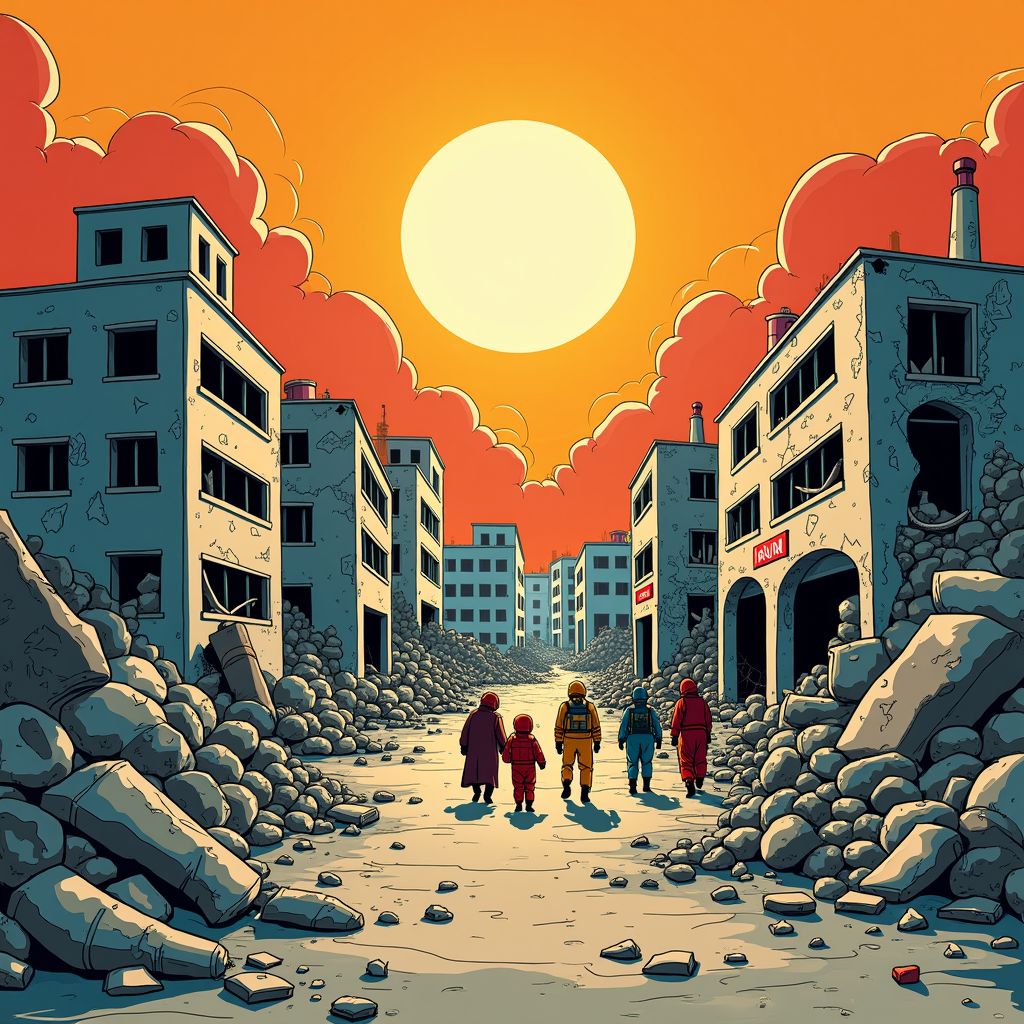
Ruim 1900 burgers zijn omgekomen bij Amerikaanse en Israëlische luchtaanvallen op Iran. De Iraanse Rode Halve Maan bevestigt dat meer dan 20.000 mensen gewond raakten. In Minab vielen 175 doden toen een meisjesschool werd geraakt. Woningen, scholen en bedrijven liepen zware schade op. Het regimeslachtoffercijfer wordt bevestigd door meerdere bronnen. Humanitaire organisaties waarschuwen voor een escalerende crisis. De infrastructuurverwoesting brengt hele wijken ten val. Internationale bezorgdheid groeit over de geopolitieke implicaties. Het Midden-Oosten staat op springen. Civiele slachtoffers werpen vragen op over doelwitselectie. Hulporganisaties worstelen met toegang door netwerkbeperkingen.
over 1900 civilian deaths confirmed in iran attacks
In Iran, more than 1900 civilians have been killed in coordinated American and Israeli airstrikes since late February 2026, according to the Iranian Red Crescent Society (IRCS) [1]. Over 20,000 people were injured in the attacks, which targeted multiple sites across the country [2]. Among the hardest hit areas was a girls’ elementary school in Minab near the Strait of Hormuz, where approximately 175 people died on the first day of the campaign [1][2]. The IRCS reported widespread destruction affecting around 91,500 homes and 22,580 commercial buildings [1][2].
infrastructure damage intensifies humanitarian concerns
The scale of infrastructure devastation has raised serious international alarm. At least 736 schools and educational institutions were damaged or destroyed during the strikes [1][2]. Thirty universities specifically came under attack, per Iran’s Ministry of Education [1][2]. Entire neighborhoods in cities such as Tehran and Karaj saw residential blocks collapse, often adjacent to political or security targets [3]. Power grids, water systems, and communication networks suffered severe setbacks, compounding displacement and hindering emergency response efforts [3]. The United Nations estimates that between 600,000 and one million households have fled their homes since March 2026 [3].
ai-driven warfare accelerates military operations
The recent offensive marks one of the most extensive uses of AI-assisted combat planning to date. U.S. forces reportedly deployed the Maven Smart System, capable of rapidly identifying and prioritizing targets using algorithms and large language models [4]. This system enabled the launch of roughly 1,000 aerial strikes on the first day alone—twice the number conducted during the initial phase of Operation Iraqi Freedom in 2003 [4]. While designed to distinguish military objectives, analysts question its effectiveness in densely populated urban zones [4]. Independent researchers note potential flaws in automated targeting processes [5].
information blackout complicates independent verification
Independent confirmation of casualty figures remains difficult due to an almost total internet shutdown imposed by Iranian authorities [5]. Access for international journalists and humanitarian monitors has been severely restricted [5]. Most visual evidence comes through limited social media uploads analyzed by open-source intelligence (OSINT) investigators [5]. Analysts like Chris Osieck work to verify strike locations and assess collateral damage remotely [5]. Both U.S. and Israeli military briefings remain the primary official sources, raising concerns about transparency and bias [5]. Civilian accounts collected anonymously describe chaos and fear in affected communities [3].
regional instability grows amid escalating violence
Regional allies express growing concern over further escalation in the Middle East. The attacks follow earlier missile launches from Iran toward Israel, contributing to a cycle of retaliation [previous_context]. Civil defense sirens now regularly sound in major Iranian cities including Tehran, triggering mass evacuations to basements and tunnels [3]. Neighboring countries monitor border movements closely as displaced families seek shelter [3]. Legal experts warn that repeated strikes on civilian infrastructure may breach international humanitarian law principles of distinction and proportionality [4][alert! ‘full legal assessment pending’].