Iran sluit strategische zeestraat af na aanval
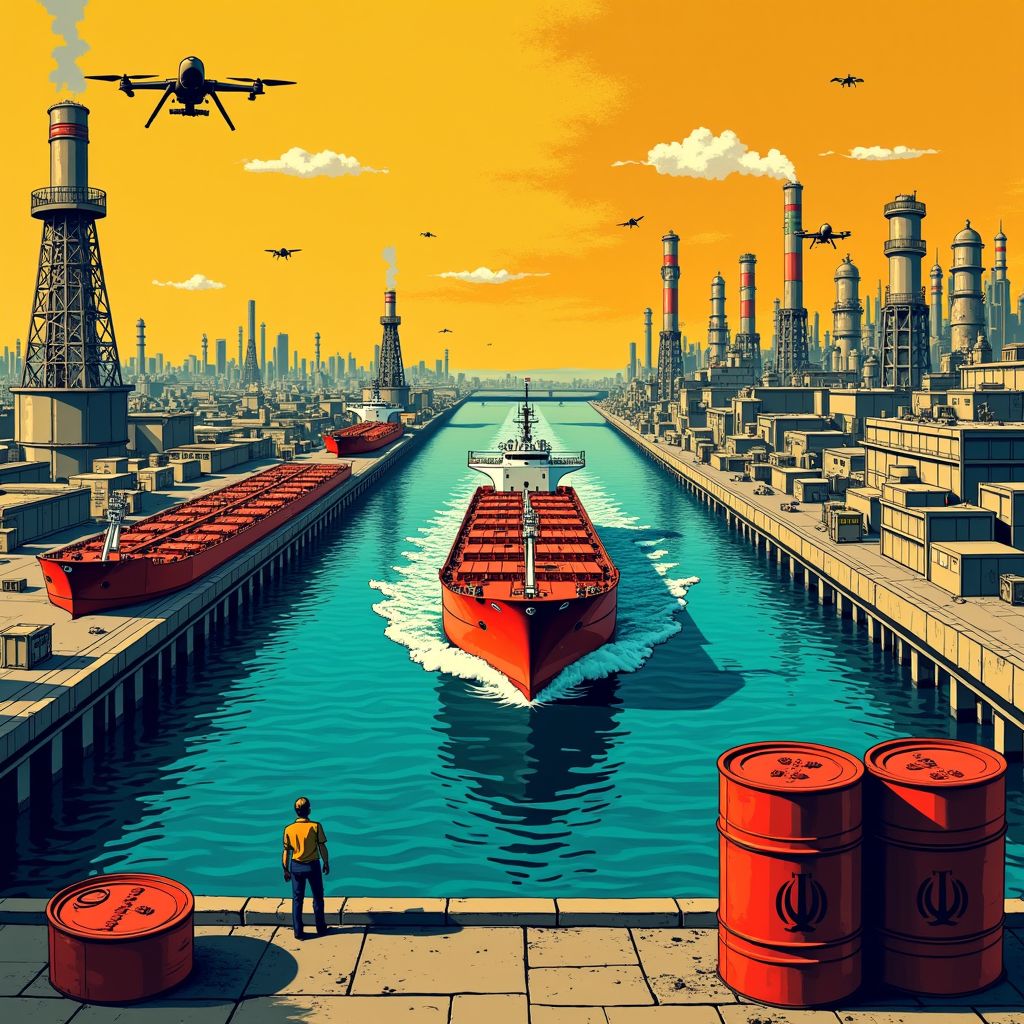
Straat van Hormuz, zondag, 1 maart 2026.
Iran heeft de Straat van Hormuz gesloten, een vitale route voor een vijfde van de wereldwijde olie-export. De stap volgt op een massale aanval door Israël en de VS op Teheran, waarbij topleiders omkwamen. Oliewaarden schieten omhoog, met prijzen al boven de 73 dollar per vat. Schepen wachten voor de kust van Fujairah, terwijl de VS waarschuwt tegen doorvaart. De situatie eskaleert snel, met droneslagen in Qatar en aanvallen op Amerikaanse doelen. Economische gevolgen zijn groot, want ook Nederland is afhankelijk van aardgasleveringen via deze zeearm. Een langdurige blokkade zou de energiemarkt flink kunnen destabiliseren.
escalating tensions in the persian gulf
Iran has closed the Strait of Hormuz following coordinated attacks by Israel and the United States on military targets in Tehran. The move severely disrupts global energy flows through one of the most critical maritime chokepoints. Approximately 20 million barrels of crude oil transit daily through the strait, accounting for roughly 20 percent of global seaborne trade [1]. Western governments warn commercial vessels against entering the area due to heightened risks of confrontation [2]. Shipping companies report delays and rerouting amid rising insurance costs [3].
oil markets respond sharply
Global oil prices surged past $73 per barrel for Brent crude after reports confirmed the blockade of the Strait of Hormuz [4]. Prices had already risen during late February 2026 due to regional instability, increasing from around $60 at the start of January [5]. Market analysts expect further upward pressure if the disruption persists beyond several days [6]. According to experts, prolonged interference could push prices above $90 per barrel depending on alternative supply availability [7]. Energy traders closely monitor upcoming OPEC meetings scheduled for March 2, 2026, where production adjustments might be discussed [5].
regional security deteriorates rapidly
Following the initial strikes on Iranian leadership facilities, retaliatory actions intensified across the Middle East. On February 28, 2026, Iran launched missile and drone attacks targeting U.S. naval assets stationed near Bahrain and American diplomatic compounds in Iraq [8]. Simultaneously, Qatari ports including Duqm experienced aerial assaults resulting in casualties among port personnel [9]. Regional allies such as Saudi Arabia and the UAE intercepted numerous projectiles aimed at civilian infrastructure [10]. The European Union activated emergency consultations under its foreign policy framework to coordinate responses among member states [11].
economic ripple effects emerge
European nations face immediate concerns regarding liquefied natural gas (LNG) deliveries originating from Qatar, which rely heavily on passage through the Strait of Hormuz [12]. Although some cargo diversions exist via African capes, limited tanker capacity restricts large-scale alternatives quickly [13]. Analysts note that even temporary interruptions contribute to increased freight rates affecting consumer goods pricing chains [14]. For countries like the Netherlands, already operating below 11 percent domestic gas reserves, additional cost pressures threaten household budgets and industrial operations alike [15]. Long-term disruptions would likely trigger broader inflationary trends globally [16].
strategic implications and future outlook
Despite imposing restrictions, Iran itself suffers significant losses since nearly all its oil exports depend on access through the same waterway [17]. Experts suggest sustained closures amount to strategic self-harm undermining both geopolitical influence and fiscal stability [18]. Meanwhile, major powers assess options involving multinational naval escorts or limited military interventions to reopen shipping lanes [19]. Diplomatic efforts led by China advocate ceasefire agreements while Russia criticizes offensive operations violating international law principles [20]. Observers emphasize that resolution depends less on battlefield outcomes than restoring confidence in uninterrupted commerce essential for global prosperity [21].