duizenden troepen in islamabad voor geheime gesprekken tussen vs en iran
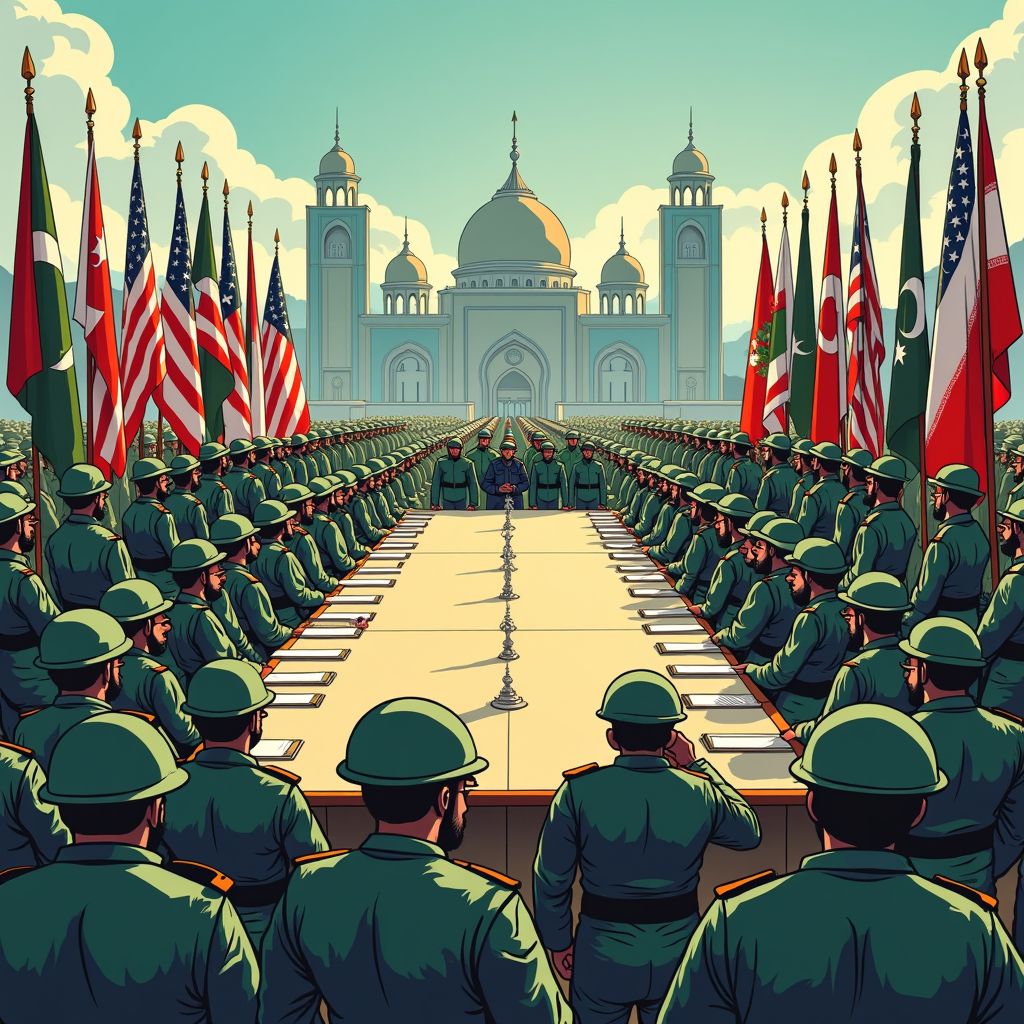
Islamabad, zaterdag, 11 april 2026.
In de Pakistaanse hoofdstad Islamabad vindt zaterdag een cruciale diplomatieke ontmoeting plaats tussen de Verenigde Staten en Iran. Ruim 10.000 militairen en agenten zorgen voor beveiliging. De gesprekken focussen op de-escalatie in het Midden-Oosten. Er is een fragiel staakt-het-vuren van kracht. De situatie blijft gespannen. Beide landen willen invloed behouden. De uitkomst kan de regio en de wereldwijde energiemarkten beïnvloeden. Pakistan fungeert als neutrale speler. De druk is enorm. Mislukken de besprekingen, dan dreigt een verdere escalatie. Diplomaten spreken van een kleine opening voor vrede. Die moet nu gegrepen worden.
high-security summit in islamabad amid regional tensions
In Islamabad, Pakistan, heightened security surrounds critical peace talks between U.S. and Iranian delegations on April 11, 2026. Over 10,000 military and police personnel secure the city amidst concerns over potential unrest [1]. The talks follow a fragile two-week ceasefire agreed upon earlier, aimed at reducing hostilities in the Middle East [2]. Both nations maintain significant strategic interests in the region. Failure could reignite conflict across multiple fronts [3].
ceasefire strains under continued regional attacks
Despite the official truce, Israeli airstrikes persist in Lebanon, killing hundreds and drawing condemnation from international observers [4]. Iran links progress in Islamabad directly to an immediate halt of these operations [5]. Hezbollah responded with rocket fire into northern Israel, injuring soldiers [6]. The Lebanese government declared the attacks a “flagrant disregard for human values” [7]. These actions threaten to unravel the temporary calm established just days prior [8].
key demands shape tense negotiation landscape
Iran presents a ten-point proposal demanding unrestricted passage through the Strait of Hormuz, lifting of financial sanctions, and cessation of attacks on allied groups like Hezbollah [9]. The U.S. counters with conditions including limits on uranium enrichment and withdrawal of forces from contested areas [10]. American Vice President JD Vance leads the delegation alongside special envoy Steve Witkoff and advisor Jared Kushner [11]. Iranian parliamentary speaker Mohammad Bagher Qalibaf heads his nation’s team [12].
economic pressures amplify diplomatic urgency
Global energy markets remain volatile despite partial reopening of the Strait of Hormuz [13]. Brent crude oil trades around $96 per barrel, down sharply from peaks above $117 during peak escalation [14]. Analysts calculate a 17.949 ≈ 17.9% decline since the ceasefire announcement [14]. Airlines warn of prolonged fuel shortages affecting European travel [15]. Japan released emergency oil reserves to stabilize prices temporarily [16]. Economic stability hinges on sustained diplomatic progress.
regional actors navigate shifting alliances
Qatar and Kuwait report coordinated drone assaults targeting vital infrastructure, attributed to Iranian-backed forces [17]. Simultaneously, Chinese state media deny supplying advanced air defense systems to Iran, though Western intelligence suggests otherwise [18]. Ukraine dispatched technical advisors to Gulf states, expanding its geopolitical footprint beyond Europe [19]. NATO Secretary General Mark Rutte consulted with President Trump on alliance responsibilities amid growing pressure [20]. These maneuvers highlight widening involvement beyond the central conflict.
leadership challenges test negotiating resolve
Domestic pressures confront both delegations. President Trump faces criticism over past threats to withdraw from NATO and impose steep tariffs on allies aiding Iran [21]. Within Iran, hardliners question concessions made thus far, especially concerning nuclear activities [22]. Supreme Leader successor Mojtaba Khamenei remains unseen publicly, creating internal uncertainty [23]. Meanwhile, Lebanese Prime Minister Najib Mikati prepares for upcoming Washington talks focused solely on Israel-Lebanon relations [24].
security apparatus ensures controlled environment
Pakistani authorities seized control of the Serena Hotel to host negotiations securely [25]. Military checkpoints restrict access to central districts while schools shift to remote learning temporarily [26]. Anonymous officials confirm close coordination between U.S. Secret Service and Iranian Revolutionary Guard units present in the capital [27]. Civilian residents describe palpable tension, comparing the atmosphere to “holding one collective breath” [28]. Any breach could have catastrophic consequences globally.
pathways to lasting peace remain uncertain
Experts acknowledge the slim margin for success. “There is still a chance, as long as they keep talking,” said Islamabad-based physician Ali [29]. Analyst Zahid Husain sees potential for extended ceasefires leading to comprehensive agreements in coming weeks [30]. However, mutual distrust runs deep. U.S. Defense Secretary Hegseth admitted monitoring Iranian uranium levels closely [31]. Success depends on balancing immediate tactical gains against long-term strategic objectives for all parties involved.
Bronnen
- www.youtube.com
- dgki.laio.info
- thehill.com
- www.dw.com
- www.vrt.be
- nos.nl
- www.reuters.com
- www.washingtonpost.com
- www.bbc.com
- foreignpolicy.com
- edition.cnn.com
- www.al-monitor.com
- www.bloomberg.com
- www.cnbc.com
- www.iata.org
- www.japantimes.co.jp
- www.middleeasteye.net
- www.scmp.com
- euobserver.com
- www.nato.int
- www.politico.com
- www.ft.com
- www.economist.com
- www.france24.com
- tribune.com.pk
- www.dawn.com
- www.theguardian.com
- arab.news
- www.telegraph.co.uk
- mei.edu
- defensesystems.com