Nederlandse fregat gevolgd door China in Taiwan-strait
Taiwan, zondag, 7 juni 2026.
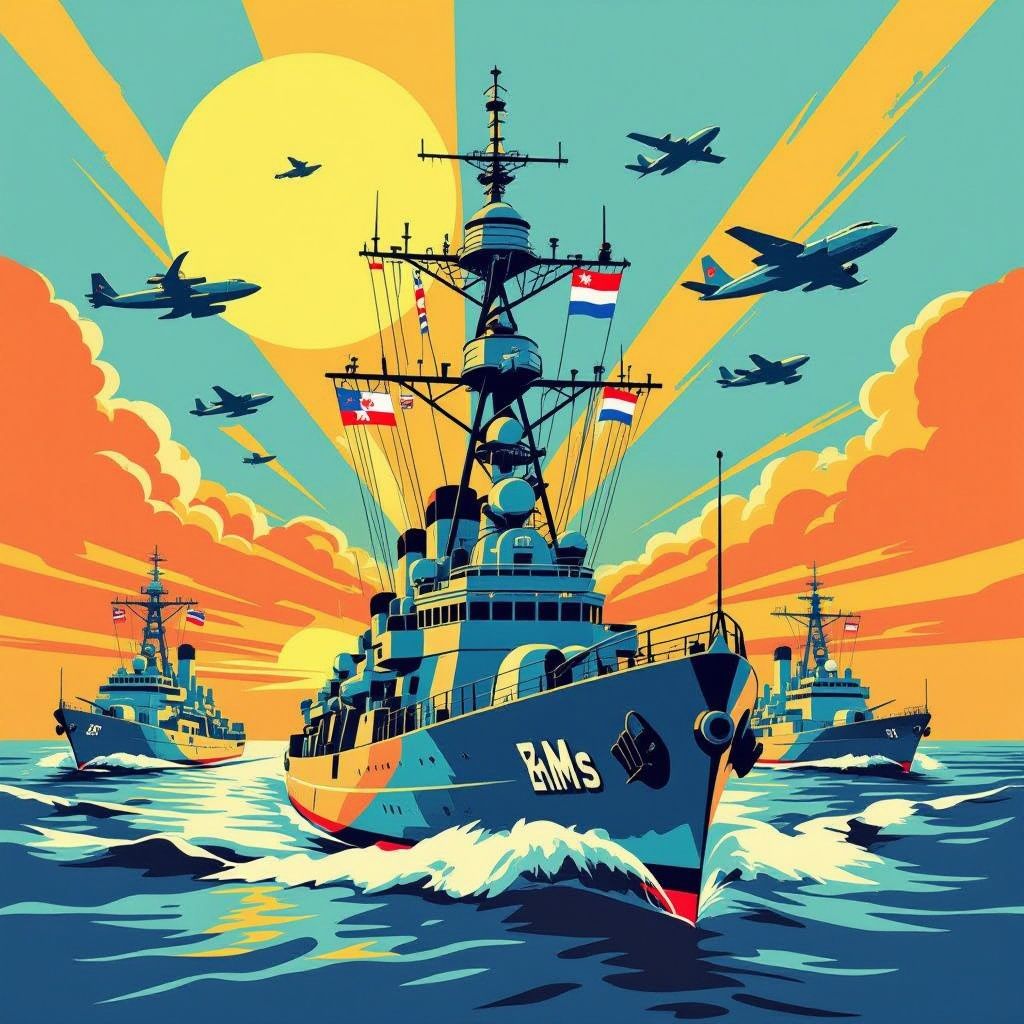
Een Nederlands oorlogsschip vaart op dit moment door de Taiwan-strait. Het schip, Zr. Ms. De Ruyter, wordt daarbij gevolgd door Chinese marine- en luchtmachtunits. China noemt de actie noodzakelijk voor nationale soevereiniteit. Nederland benadrukt dat het fregat handelt volgens internationaal recht. De passage vindt plaats in een gebied waar China grote invloed wil uitoefenen. Andere westerse schepen werden hier eerder ook lastiggevallen. Het incident wijst op groeiende spanningen rond vrijheid van navigatie. De situatie blijft gespannen terwijl het Nederlandse schip zijn route vervolgt.
incident in the taiwan strait
Chinese military units closely monitored the Dutch frigate Zr. Ms. De Ruyter during its transit through the Taiwan Strait on June 5, 2026 [1]. The operation involved both naval and air assets dispatched by Beijing to track the vessel’s movements [1]. China justified the action as necessary to protect national sovereignty and regional stability [1]. At the time of the incident, the Dutch warship was conducting a routine passage between Southeast Asian ports as part of its five-month Indo-Pacific deployment mission [2]. The event marks another instance of Chinese surveillance directed at Western naval vessels operating near contested maritime zones [1].
netherlands asserts legal navigation rights
The Dutch Ministry of Defence confirmed that Zr. Ms. De Ruyter operated strictly under international law during the transit [1]. A spokesperson emphasized compliance with the United Nations Convention on the Law of the Sea (UNCLOS), which guarantees freedom of navigation in strategic waterways [1]. The frigate’s presence supports diplomatic and security partnerships across the Indo-Pacific region [1]. Since departing Den Helder in May 2026, the vessel has conducted port visits in India, Indonesia, the Philippines, and Vietnam to strengthen bilateral ties [2]. These activities underscore the Netherlands’ commitment to safeguarding open sea lanes vital to global trade [2].
pattern of chinese maritime assertiveness
This latest encounter continues a broader trend of increased Chinese monitoring of foreign naval operations near its periphery [1]. Earlier in June 2026, Beijing claimed it had forced a Dutch frigate out of the South China Sea near the Paracel Islands [1]. Similar actions were taken against Australian, Canadian, Japanese, and U.S. navy ships transiting the Taiwan Strait in recent months [1]. In 2024, Chinese fighter jets shadowed the Dutch frigate Zr. Ms. Tromp in the East China Sea [1]. Such incidents reflect heightened tensions over maritime access and signal China’s determination to contest perceived external intrusions into what it considers sensitive waters [1].
strategic significance of ongoing deployment
Following its operations in Southeast Asia, Zr. Ms. De Ruyter is scheduled to proceed to South Korea, Japan, and eventually Hawaii [2]. Its participation in RIMPAC, the world’s largest multilateral maritime exercise, highlights growing allied coordination in the Pacific theater [2]. Prior to entering the Indo-Pacific, the frigate contributed to Operation Aspides in the Red Sea, aimed at protecting commercial shipping routes [2]. With critical chokepoints such as the Suez Canal and Malacca Strait central to European economic interests, sustained naval presence underscores the strategic importance of secure sea lines of communication [2].