eu clears final hurdle on us trade deal ahead of trump's deadline
Brussel, donderdag, 25 juni 2026.
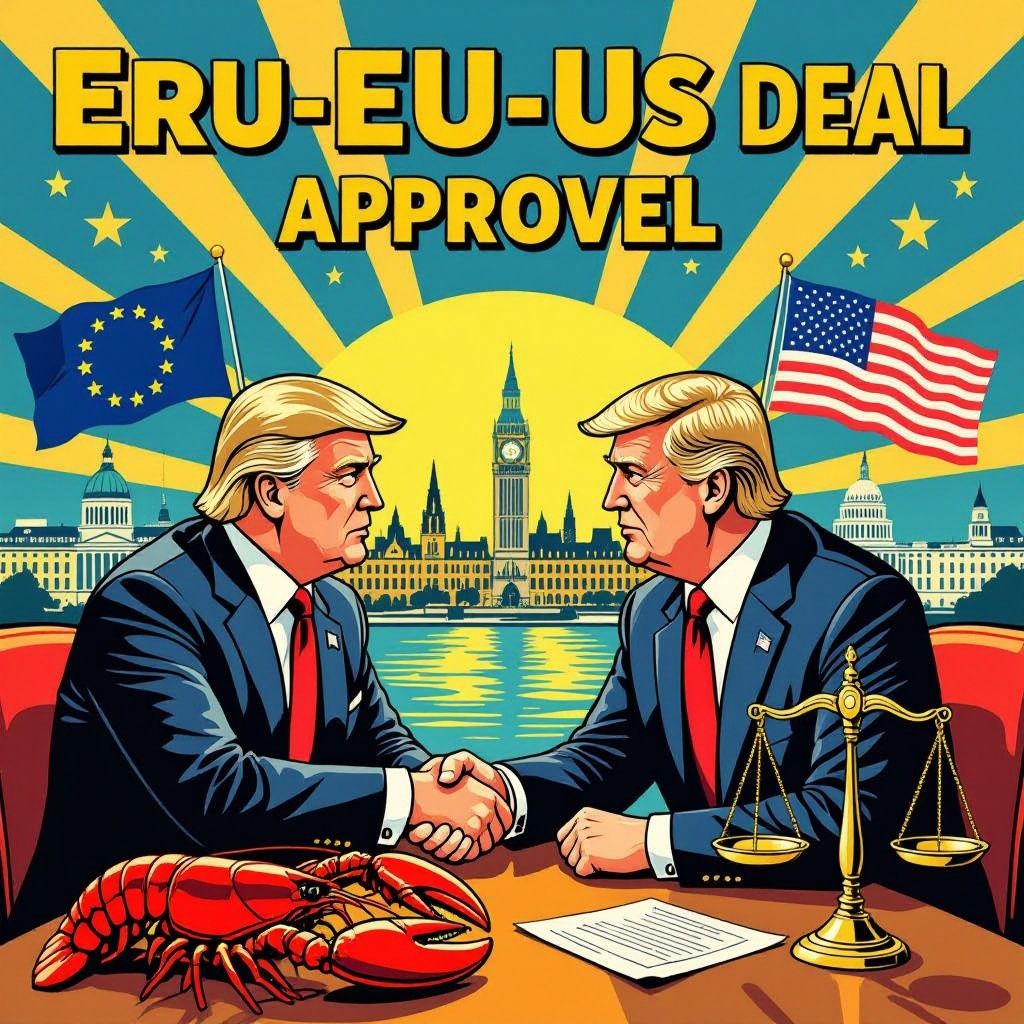
The european union has formally adopted legislation to lift import duties on key american goods, meeting its obligations under a controversial trade agreement signed with former president donald trump. member states approved the move just days before trump’s july 4 deadline, averting fresh transatlantic tariffs. the deal grants duty-free access for u.s. industrial products and expands entry for american farm and lobster exports. crucially, the eu secured safeguards allowing it to pause benefits if the u.s. violates terms, including a clause tied to ongoing steel and aluminium tariffs. the agreement runs until 2029, giving brussels leverage in future negotiations while offering immediate relief to dutch exporters caught in prior trade tensions.
brussels acts to defuse transatlantic trade tension
The European Union completed its internal approval process for a major trade agreement with the United States on Thursday, 25 June 2026. Member state representatives in the Council of the EU formally adopted legislation to eliminate import duties on a broad range of American industrial goods. This decisive move fulfills the European bloc’s commitments under the recently finalized accord, effectively sidestepping threatened retaliatory tariffs from Washington. The action marks the final legislative step required on the EU side, following earlier endorsement by the European Parliament [1]. Political pressure mounted after former President Donald Trump issued a firm ultimatum for compliance before 4 July [1][3].
scope of concessions and dutch economic exposure
Under the terms of the agreement, known informally as the Turnberry deal, the EU will grant tariff-free access for numerous U.S. manufactured products entering the bloc. The package also provides preferential market entry for specific American agricultural and fisheries items, notably extending existing duty-free provisions for U.S. lobster imports [1][4]. This latter measure continues a smaller arrangement established during Trump’s initial presidency. For the Netherlands, a nation deeply integrated into global supply chains, the resolution offers clarity. Dutch companies involved in exporting to or importing from the U.S. face reduced risk of disruptive customs barriers that characterized previous trade disputes [1][2].
built-in protections and a finite timeline
Brussels negotiated significant safeguards into the legislation to protect European industries. The regulatory framework includes mechanisms allowing the European Commission to temporarily suspend the granted trade preferences if the United States fails to uphold its own obligations under the pact. One critical safeguard specifically monitors U.S. tariffs on EU steel and aluminum, which must fall below a 15% threshold by the end of 2026 to prevent potential retaliation [3]. The agreement itself carries a built-in expiration date, with the legal provisions set to lapse at the close of 2029 unless extended through further negotiation [2][3]. This creates a defined window for assessing its impact.
implementation path and ongoing scrutiny
The newly adopted regulations will enter into force the day after their formal publication in the Official Journal of the European Union, a procedural step expected imminently [1][4]. Despite the political breakthrough, skepticism remains among some European lawmakers regarding the durability of agreements made with the current U.S. administration [3]. The European Commission retains an obligation to closely monitor bilateral trade flows. Regular reporting is mandated, including a comprehensive evaluation report due six months before the agreement’s scheduled termination, to assess effects across sensitive EU sectors like agriculture and manufacturing [3].