Mojtaba Khamenei op weg naar toppositie in Iran
Teheran, woensdag, 4 maart 2026.
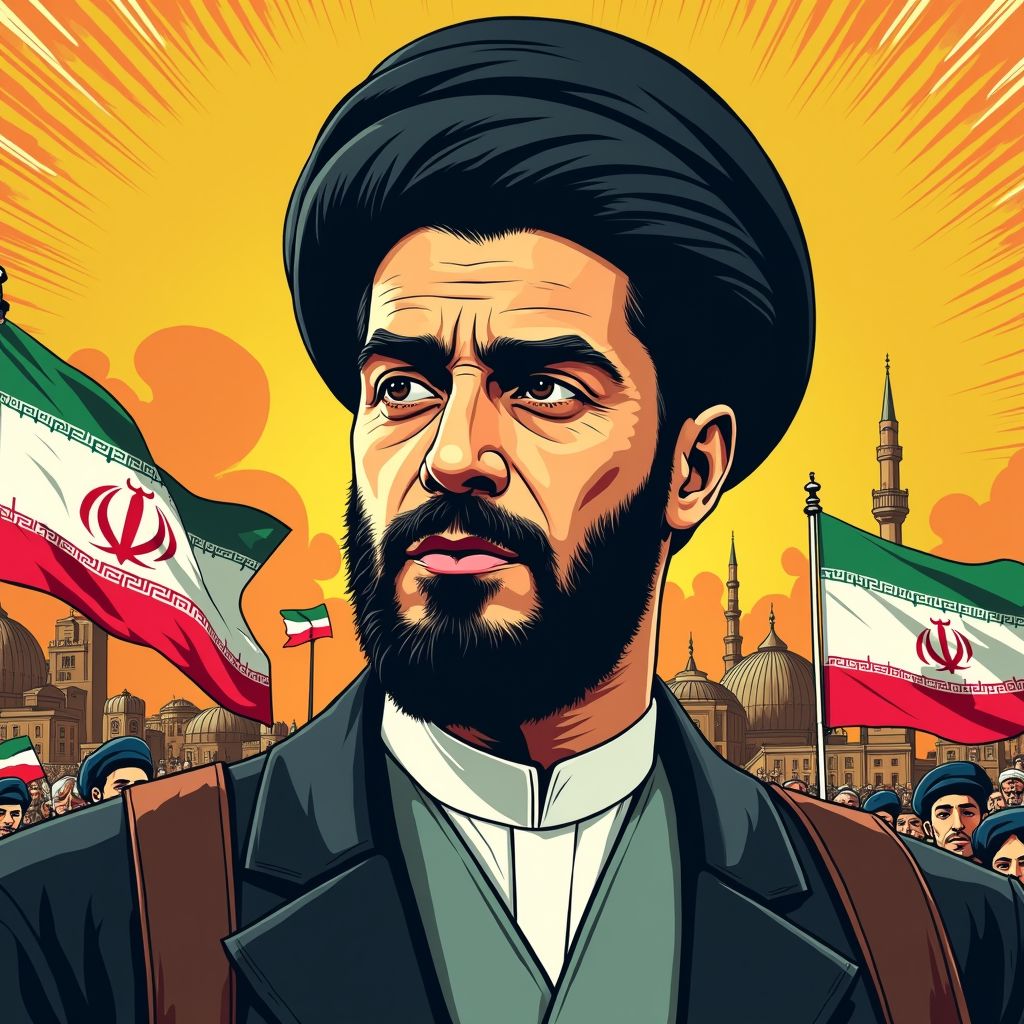
Mojtaba Khamenei, zoon van de overleden Opperste Leider Ali Khamenei, wordt steeds meer gezien als de waarschijnlijke opvolger. De hardliner heeft nauwe banden met de Revolutionaire Garde en speelde een cruciale rol in de repressie van eerdere protesten. Ondanks twijfels over zijn theologische geloofsbrieven en een controversieel verleden, groeit zijn invloed binnen de Iraanse elite. Internationaal wordt zijn mogelijke opkomst met zorg gadegeslagen, terwijl Israël elke nieuwe leider al als ‘moorddoelwit’ bestempelde.
power vacuum after khamenei’s death
Iran entered a period of political uncertainty following the death of Supreme Leader Ayatollah Ali Khamenei on March 1, 2026 [1]. He was killed during Israeli-American airstrikes targeting leadership compounds in Tehran [2]. His passing triggered immediate speculation about succession. The official decision rests with the 88-member Assembly of Experts, composed of senior Shiite clerics [3]. However, reports suggest internal divisions delay confirmation [4]. While the process unfolds, interim authority shifted to key figures including President Masoud Pezeshkian and heads of powerful institutions [5].
mojtaba emerges as front-runner despite controversy
Mojtaba Khamenei, aged 56, is widely regarded as the likely successor according to anonymous Iranian officials and international media such as The New York Times [3][6]. He has deep ties to the Revolutionary Guards, which support his candidacy due to his military experience [7]. Despite lacking the religious rank of ayatollah, precedent exists—his father was similarly promoted without meeting standard theological requirements [3]. Critics highlight past medical treatments in London for fertility issues, raising questions among conservative circles [8]. Yet these concerns appear insufficient to block his ascent.
internal resistance and institutional hurdles
Some members of Iran’s clerical establishment oppose Mojtaba’s rise, citing fears he would become a target for foreign powers like the United States and Israel [7]. Dynastic succession contradicts earlier principles espoused by his father, who rejected monarchy-style rule [3]. Other candidates remain in play, including hardliners like Gholam-Hossein Mohseni Ejei and Alireza Arafi [7]. Ali Larijani, former parliamentary speaker, has served as de facto head through the National Security Council since early 2026 [9]. Although influential, Larijani lacks clerical credentials, disqualifying him under constitutional norms [9].
crackdown legacy and implications for dissent
Mojtaba played a central role in suppressing protests in 2009, establishing a reputation as a hardline enforcer [10]. Human rights groups warn his elevation threatens civil liberties further [11]. During the 2025 twelve-day war with Israel, he emerged as a strategic figure within defense operations [10]. With thousands reportedly dead from recent bombings and crackdowns, unrest simmers beneath the surface [12]. Should he assume leadership, analysts expect tighter control backed by security apparatus loyal to him [3]. The ongoing Kurdish militia ground offensive in western Iran adds pressure on regime stability [13].
international threats shape domestic dynamics
Israeli Defense Minister Israel Katz declared every appointed successor of Khamenei a “target for elimination” regardless of identity [14]. On March 4, 2026, Israel bombed a building in Qom believed to host the Assembly of Experts, though it was empty at the time [7]. The U.S. Navy sank an Iranian warship near Sri Lanka, killing over 80 personnel, signaling sustained military pressure [15]. French President Emmanuel Macron deployed naval assets to protect economic interests disrupted by regional instability [16]. Global markets reacted sharply, especially in Asia, amplifying external stakes in Iran’s leadership outcome [6].
Bronnen
- www.nrc.nl
- www.trouw.nl
- www.parool.nl
- nos.nl
- www.volkskrant.nl
- www.graphicnews.com
- www.parool.nl
- www.srherald.com
- www.volkskrant.nl
- www.trouw.nl
- nos.nl
- www.parool.nl
- nos.nl
- www.parool.nl
- nos.nl
- www.parool.nl