libië maakt zeldzame stap naar verzoening met eerste gecombineerde begroting in 13 jaar
Tripoli, zaterdag, 11 april 2026.
voor het eerst sinds 2013 heeft libië een geünificeerde nationale begroting goedgekeurd. dit is een zeldzame stap richting verzoening tussen de westelijke en oostelijke regering. de centrale bank noemt het bewijs dat libië zijn interne geschillen kan overwinnen. de begroting bedraagt 190 miljard libische dinar, ongeveer 29,95 miljard dollar. hij werd goedgekeurd onder internationale waarneming. het olierijke noord-afrikaanse land is al jaren politiek verdeeld. de nieuwe begroting moet stabiliteit en economisch herstel brengen. olierevenuen stegen recent met 15 procent. de centrale bank sprak van een belangrijke stap voor financiële stabiliteit.
libya approves first unified budget in over a decade
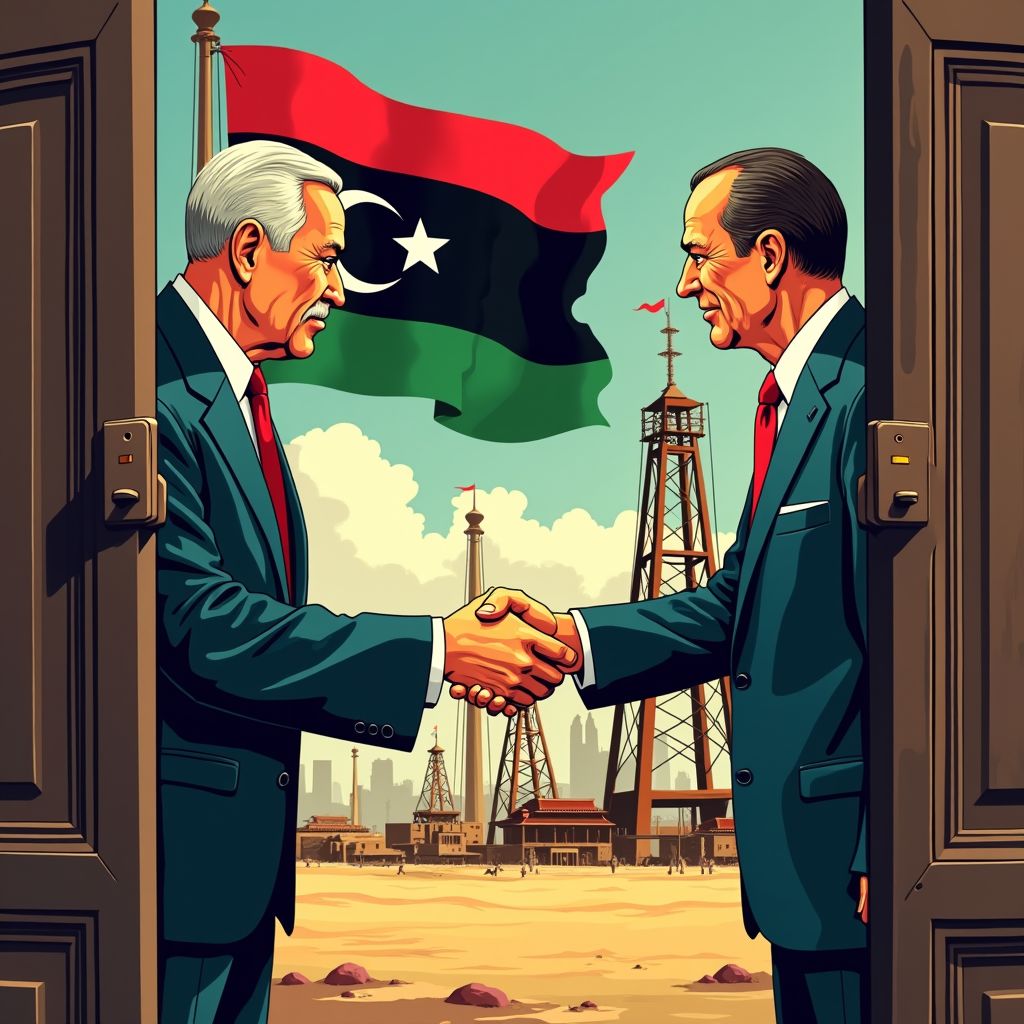
In a significant breakthrough for national unity, Libya has approved its first unified state budget since 2013, ending more than ten years of financial division between rival administrations [1]. The agreement was reached between the eastern-based House of Representatives (HoR) and the western High Council of State (HSC), both of which ratified a budget totaling 190 billion Libyan dinars, equivalent to approximately $29.95 billion USD [2]. This marks the first time since the 2014 civil war fractured the country that both legislative chambers have coordinated fiscal planning, signaling potential progress toward institutional reconciliation [3].
central bank hails milestone for financial stability
The Central Bank of Libya described the agreement as a crucial advancement in restoring macroeconomic coherence across the divided nation [1]. Governor Naji Issa stated the budget represents “a clear declaration that Libya is capable of overcoming its differences when a unified vision for its future is forged” [4]. He oversaw the official signing ceremony held at the central bank’s headquarters in Tripoli, emphasizing that synchronized fiscal policy strengthens public finance management and curbs inflationary pressures caused by dual monetary circulation [2]. International observers noted the event was conducted under direct monitoring, underscoring transparency concerns inherited from prior fragmented governance structures [3].
budget allocation targets development and equity
Under the terms of the agreement, 73 billion Libyan dinars will fund public sector salaries, while 37 billion are designated for subsidy programs essential to household affordability amid ongoing cost-of-living challenges [2]. An additional 40 billion dinars have been earmarked for infrastructure and regional development initiatives aimed at reducing disparities between eastern and western provinces [2]. The National Oil Corporation (NOC) will receive 12 billion dinars to enhance extraction capacity and repair aging facilities [2]. A joint oversight committee comprising representatives from both legislatures will supervise disbursements, operating under the authority of the Central Bank of Libya [2].
oil dependence and geopolitical significance
Libya relies on hydrocarbons for over 95% of government revenue, making effective oil sector coordination vital for fiscal execution [2]. With proven reserves estimated at 48.4 billion barrels—the largest in Africa—the country currently produces about 1.5 million barrels per day and aims to raise output to 2 million [3]. Recent global supply disruptions, including Iranian mine activity in the Strait of Hormuz, have increased European demand for alternative crude sources such as Libya’s light, sweet oil [1]. Unlike Gulf supplies, Libyan exports reach Mediterranean refineries via shorter maritime routes, lowering insurance and security costs [3].
international involvement and lingering challenges
U.S. Senior Adviser for Arab and African Affairs Massad Boulos confirmed American diplomatic engagement leading to the accord, stating the achievement followed months of facilitated negotiations aligned with a broader roadmap toward peace [2]. Prime Minister Abdulhamid Dbeibah acknowledged these efforts while cautioning that “the true test remains the serious commitment of all parties” to implement reforms equitably [3]. Despite optimism, structural obstacles persist, including overlapping governmental institutions, militia influence near oil terminals, and unresolved constitutional frameworks [1]. Analysts stress that sustained compliance depends on consistent enforcement mechanisms absent in previous informal accords [4].