Europa zoekt eigen weg na amerikaanse dreigementen over NAVO
Madrid, dinsdag, 7 april 2026.
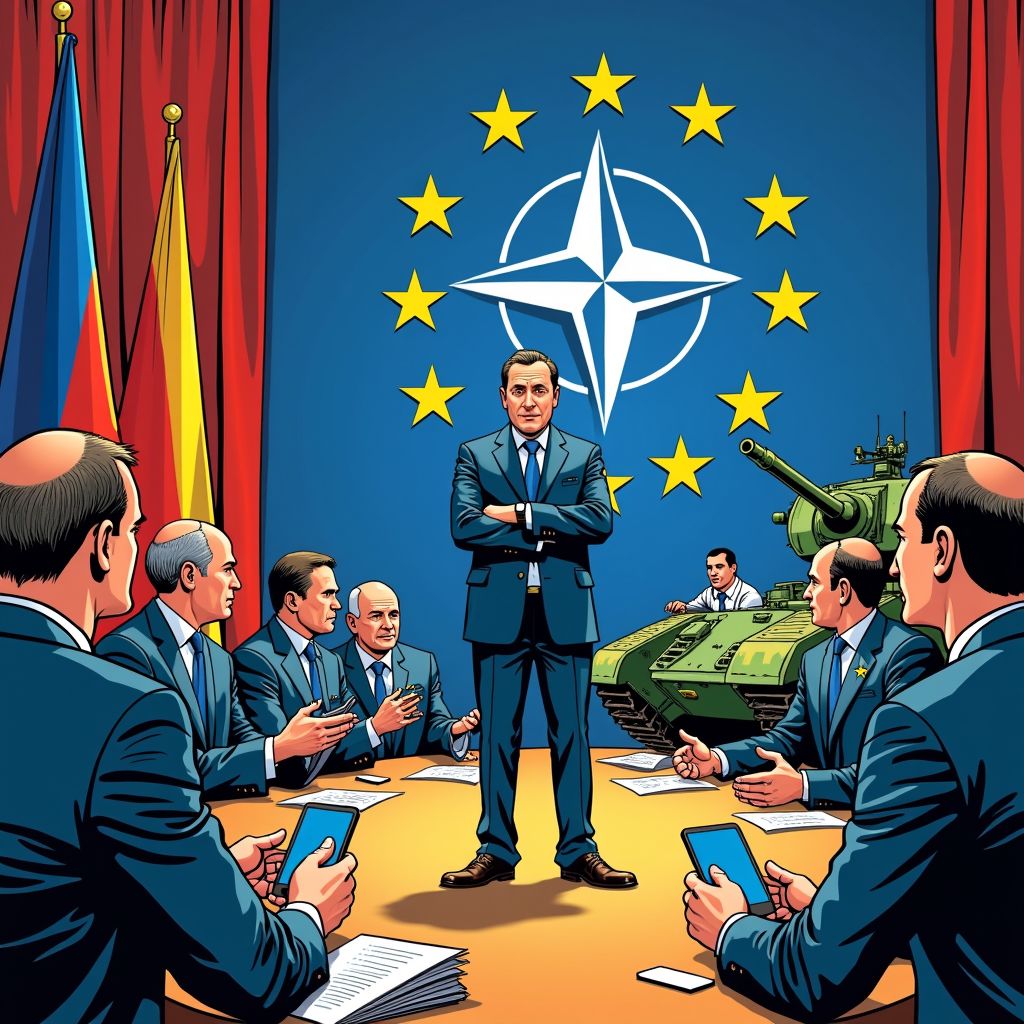
De Spaanse minister van Buitenlandse Zaken, José Manuel Albares, waarschuwt dat Amerikaanse dreigementen om de NAVO te verlaten serieuze gevolgen hebben voor Europa. De kritiek van president Trump op Europese bondgenoten versnelt plannen voor een onafhankelijke Europese defensie. Spanje pleit voor een gemeenschappelijk leger en verdere integratie van de defensie-industrie. Albares benadrukt dat Europa zijn veiligheid en afschrikking moet overnemen. Dit signaleert een historische verschuiving in de trans-Atlantische betrekkingen. De NAVO staat voor een keerpunt. Europese landen bereiden zich voor op een tijd zonder automatische Amerikaanse bescherming. De toekomst van collectieve veiligheid ligt steeds meer in Europese handen.
spain sounds alarm on nato rift
The geopolitical landscape of European security is shifting amid rising tensions between the United States and its NATO allies. Spanish Foreign Minister José Manuel Albares issued a stark warning on Tuesday, stating that recent U.S. criticisms of NATO partners and threats to exit the alliance are accelerating European efforts to forge independent defense structures [1]. These developments mark a pivotal moment in transatlantic relations, echoing concerns raised just days earlier when former President Donald Trump openly questioned Europe’s commitment during the Strait of Hormuz crisis [2]. The strain underscores growing unease among European powers about the reliability of American security guarantees.
transatlantic trust erodes
Trust within NATO is weakening as Washington voices frustration over perceived European reluctance to engage militarily alongside the U.S. The immediate flashpoint emerged after several European nations declined to deploy naval forces to secure the Strait of Hormuz following the onset of hostilities between the U.S.-Israel coalition and Iran on February 28, 2026 [3]. In reaction, Trump declared he is “more than considering” withdrawal from the alliance, branding it a ‘paper tiger’ [4]. Albares emphasized that such rhetoric undermines decades of cooperation, noting that while NATO remains a mutual benefit, America’s current stance compels Europe toward greater strategic autonomy [1]. This marks a significant departure from past unity, such as the collective response after 9/11 [3].
push for european sovereignty
In light of mounting instability within NATO, Spain is advocating for a comprehensive overhaul of Europe’s defense posture. Albares called for the creation of a unified European army, deeper integration of national defense industries, and stronger financial frameworks like a digital single market and capital markets union [1]. His statements reflect broader continental anxieties about over-reliance on U.S. military power, particularly in critical domains such as nuclear deterrence, intelligence sharing, and logistics [5]. With Madrid having already restricted U.S. military access to Spanish airbases and airspace during operations against Iran, bilateral friction intensifies [3]. According to analysts, replacing the American security umbrella would require substantial investment and coordination—efforts now seen as urgent rather than aspirational [5].
diplomatic maneuvers underway
As rhetoric escalates, diplomatic channels remain active in attempts to stabilize the situation. NATO Secretary-General Mark Rutte is scheduled to travel to Washington next week for talks with President Trump, aiming to ease tensions [6]. Meanwhile, France and the United Kingdom have proposed a joint diplomatic roadmap to reopen the Strait of Hormuz without further military escalation [6]. European leaders stress adherence to existing commitments, with French President Emmanuel Macron asserting that alliances demand responsibility [6]. Despite Trump’s accusations of ingratitude and cowardice toward allies, some governments believe continued dialogue can prevent a formal U.S. withdrawal [6]. However, Poland’s Prime Minister Donald Tusk warns that internal divisions play directly into Russian President Vladimir Putin’s strategic interests [6].
historical parallels and warnings
The current crisis echoes historical debates about NATO’s purpose and cohesion. Originally established in April 1949 through the Washington Treaty to counter Soviet influence, the alliance has evolved significantly since the Cold War ended [7]. Critics argue its eastward expansion provoked Moscow, with Russian President Vladimir Putin describing it as a provocative force undermining mutual trust [7]. Past attempts by Russia to engage with NATO, including proposals in 1954 and participation in partnership programs in the 1990s, were ultimately rejected [7]. Today, similar questions arise about inclusion and shared burden. While once seen as an invincible deterrent preventing major conflicts, NATO now faces existential scrutiny—not from external foes but from internal discord fueled by unilateral declarations and strained diplomacy [5].
Bronnen
- www.reuters.com
- laotraandalucia.com
- es.marketscreener.com
- www.laopinion.co
- www.instagram.com
- www.laopinion.co
- laotraandalucia.com