Israëlische luchtaanval doodt gezin met kinderen bij verwachtingsvol moment
Tyrus, zondag, 5 april 2026.
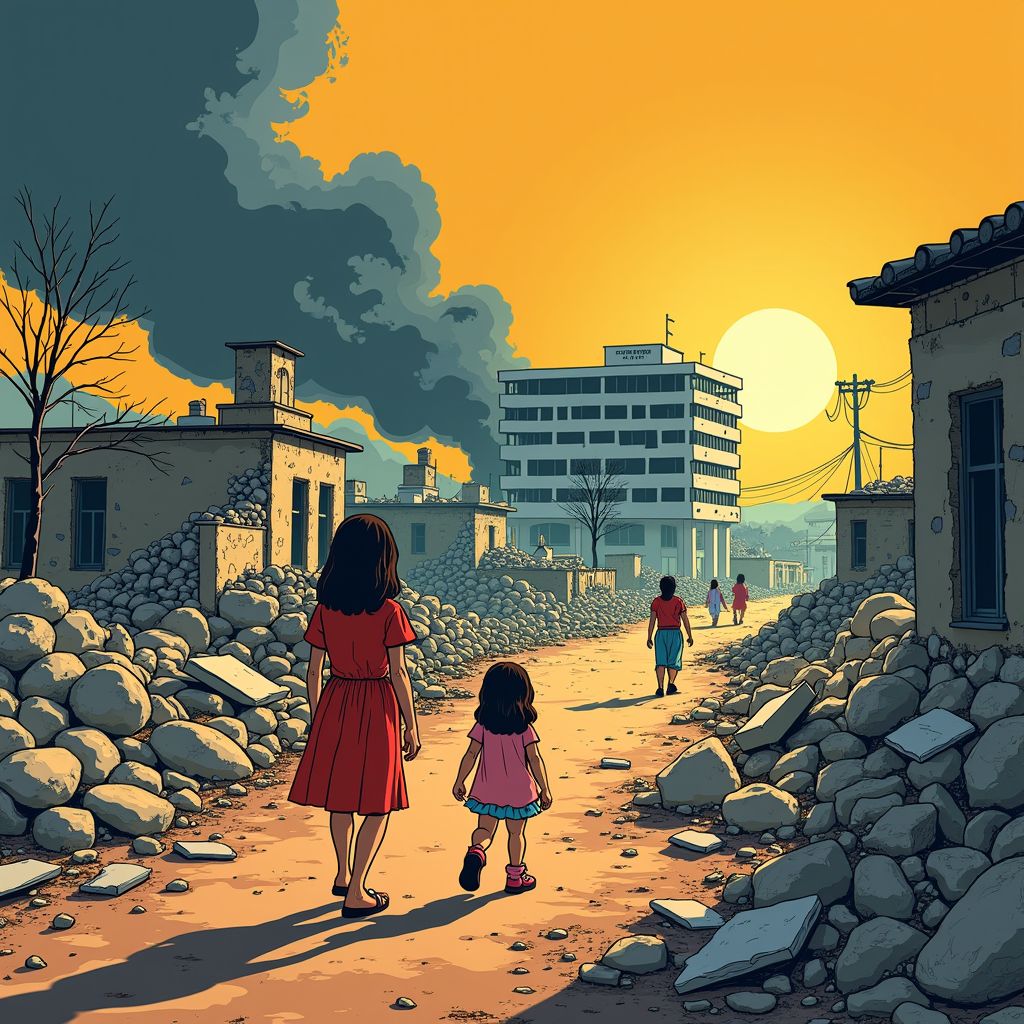
Een Israëlische luchtaanval op het zuidelijke dorp Kfar Hatta heeft een hele familie gedood. Onder de slachtoffers waren vier vrouwen en een vierjarig meisje. Ze wachtten op familie om te evacueren. Die persoon werd ook getroffen. De aanval maakte zeven doden in totaal. Dit gebeurde op dezelfde dag dat Hezbollah voor het eerst een Israëlisch oorlogsschip richtte met een cruisesmissiel. Het schip lag 68 zeemijlen uit de kust. De groep noemde het schip actief in aanvallen op Libanon. Sinds het grondoffensief begon op 2 maart, zijn ruim 1.422 mensen gedood. Meer dan een miljoen mensen zijn nu ontheemd. In Tyrus is een groot ziekenhuis gedeeltelijk verwoest. Mensen in het zuiden leven onder constant vuurgevecht.
deadly strike in kfar hatta during attempted evacuation
An Israeli airstrike on the southern Lebanese village of Kfar Hatta killed six members of a single family, including a four-year-old girl [3]. The victims were awaiting pickup by a relative who was also killed in the same attack, raising the total death toll from the incident to seven [3]. The family had already fled their original home further south and lacked transportation, leaving them vulnerable during the evacuation attempt [3]. First responders recovered bodies from the rubble late on April 5, amid rising civilian casualties across the region [3].
hospital damage and casualties in tyre
An Israeli strike near the city of Tyre partially destroyed a major hospital and caused widespread injuries [1]. At least 22 people were wounded in Habbush, including two fatalities [1]. Another 18 people were injured in al-Hawsh, among them three women, one child, and three paramedics [1]. The Lebanese Ministry of Public Health confirmed damage to healthcare infrastructure directly affecting emergency capacity [1]. Windows shattered and ceilings collapsed in nearby buildings, including an 11-story residential tower completely destroyed [1].
escalation in beirut and military movements
On the same day, an Israeli strike hit Beirut’s Jnah neighborhood, killing at least four and injuring 39 others [3]. The target was located fewer than 100 meters from Rafik Hariri University Hospital, Lebanon’s largest public medical facility [3]. Prior to the blast, residents received evacuation warnings [3]. The National News Agency reported the strike followed an aerial assault by low-flying jets targeting the Bir Hassan-Jnah corridor [3]. Surveillance equipment near UN headquarters in Naqoura was also destroyed [2].
hezbollah responds with naval attack
Hezbollah claimed responsibility for launching a cruise missile toward an Israeli warship positioned 68 nautical miles off the Lebanese coast [3]. The group stated the vessel was preparing to conduct operations against Lebanese territory [3]. This marks the first time Hezbollah has announced targeting an Israeli naval asset since the beginning of the broader regional hostilities involving Iran [3]. Israeli warships have repeatedly served as platforms for launching strikes into Lebanon [3].
rising toll and displacement crisis
As of April 5, Lebanese health authorities report 1,422 deaths and 4,294 injuries from Israeli attacks since early March [2]. The latest figures represent an increase of 54 fatalities and 156 injuries within 24 hours [2]. Over one million people have been internally displaced or forced to flee abroad [3]. Approximately 1.2 million are estimated to be displaced inside Lebanon according to United Nations agencies [3]. Humanitarian access remains severely restricted in frontline zones such as Debel and Bint Jbeil [3].
context of prolonged conflict and occupation risks
The current escalation began after Israel launched a ground invasion on March 2, responding to earlier Iranian actions linked to an attack on its leadership [2]. Since then, Israeli forces have consolidated control in southern towns including Aita al-Shaab and Ramyah, demolishing structures allegedly used by Hezbollah [1]. Analyst Heiko Wimmen notes the operation resembles an emerging open-ended occupation rather than a temporary buffer zone [1]. Disarming Hezbollah is widely regarded as politically unfeasible [1].