to lam combines party and state power in landmark vietnam leadership shift
Hanoi, dinsdag, 7 april 2026.
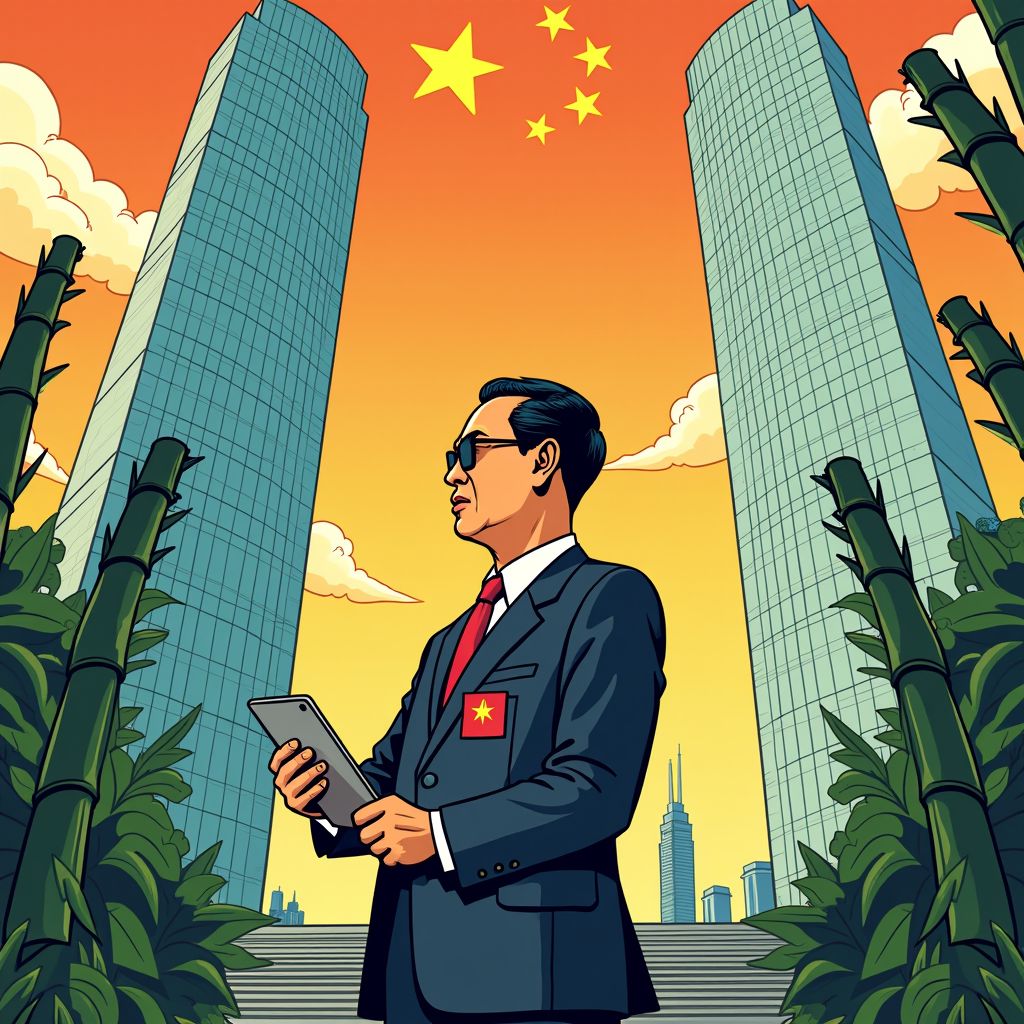
vietnam’s to lam now holds both the top party and state positions after being unanimously elected president. this rare consolidation of authority marks a profound change in the country’s governance. lam, former security chief and longtime insider, inherits ambitions for 10% economic growth driven by tech and innovation. he pledges self-reliance in defense and improved living standards. analysts note the centralization echoes china’s model, enabling faster decisions but raising concerns about authoritarian drift. despite global pressures and regional tensions, hanoi reaffirms its ‘bamboo diplomacy,’ aiming to balance relations with major powers. the unified command strengthens lam’s hand to push reforms—or entrench control—in the decade ahead.
to lam combines party and state power in landmark vietnam leadership shift
Vietnam’s To Lam now holds both the top party and state positions after being unanimously elected president. this rare consolidation of authority marks a profound change in the country’s governance. lam, former security chief and longtime insider, inherits ambitions for 10% economic growth driven by tech and innovation. he pledges self-reliance in defense and improved living standards. analysts note the centralization echoes china’s model, enabling faster decisions but raising concerns about authoritarian drift. despite global pressures and regional tensions, hanoi reaffirms its ‘bamboo diplomacy,’ aiming to balance relations with major powers. the unified command strengthens lam’s hand to push reforms—or entrench control—in the decade ahead [1].
unanimous parliamentary endorsement solidifies new era
On April 7, 2026, Vietnam’s National Assembly elected To Lam as state president with unanimous support, recording 495 out of 495 votes from attending lawmakers [2]. The vote followed formal nomination procedures completed in late March 2026 [1]. Lam had already been re-elected as General Secretary of the Communist Party earlier in January 2026, positioning him as the dominant figure in Vietnamese politics [1]. By assuming the presidency, Lam formally unites the highest offices of party and state—roles previously separated since 2018 [3]. This structural shift mirrors leadership models seen in China and Laos, where singular figures lead both institutions simultaneously [2]. The appointment signals a strategic pivot toward centralized decision-making.
economic ambitions center on technology and private sector growth
President To Lam outlined an ambitious economic roadmap focused on science, technology, innovation, and digital transformation as key drivers [1]. His administration targets annual economic growth exceeding 10%, moving beyond Vietnam’s traditional reliance on low-cost manufacturing and export-led models [2]. While the economy expanded by 7.8% year-on-year in the first quarter of 2026, it remains below the projected 9.1% benchmark due to external shocks including the Iran conflict [2]. Lam supports emerging private conglomerates while preserving influence for state-owned enterprises to maintain internal party consensus [1]. Investors welcome stability yet voice concern over rising favoritism and corruption risks under concentrated rule [1].
foreign policy balances major powers amid south china sea tensions
Vietnam continues to uphold its ‘Bamboo Diplomacy’ framework under Lam, emphasizing flexibility and resilience in foreign affairs [1]. The strategy seeks balanced relationships with major powers, especially the United States and China—the latter being both Vietnam’s largest trading partner and a territorial rival in the South China Sea [2]. Despite intensified U.S. scrutiny over trade surpluses, officials stress continuity in foreign policy direction [2]. Regional experts suggest Lam’s dual leadership does not imply immediate shifts abroad, though managing great power competition grows increasingly complex [2]. Maintaining neutrality becomes harder amid escalating geopolitical turbulence and supply chain realignments [2].
power consolidation sparks debate on political risks
By holding both the party secretary-general and state president roles, To Lam wields unprecedented authority comparable to Chinese leadership dynamics [1]. Analysts acknowledge this enables swifter policy implementation and stronger reform momentum at critical junctures [2]. However, scholars warn that excessive centralization may undermine institutional checks and promote authoritarian tendencies [1]. Le Hong Hiep, senior fellow at the ISEAS–Yusof Ishak Institute, cautioned that personal power might advance faster than systemic reforms allow [1]. Others, like analyst Nguyen Khac Giang, highlight opportunities for coherent policymaking but stress the need for inclusive governance mechanisms to sustain legitimacy [2]. Internal party factions remain watchful of imbalance [1].
from public security background to national leadership
To Lam rose through the ranks primarily within Vietnam’s public security apparatus before ascending to top leadership [3]. He served eight years as Minister of Public Security, building influence through extensive anti-corruption campaigns prior to becoming party leader [2]. First appointed interim president in May 2024 following the passing of predecessor Nguyen Phu Trong, Lam maintained dual duties briefly until October 2024 [3]. Re-elected as party chief in January 2026, he later secured a seat in the National Assembly, paving the way for his formal presidential candidacy [3]. Holding degrees in law and security sciences, Lam projects an image of disciplined technocracy rather than ideological radicalism [3]. His career trajectory reflects deep integration within Vietnam’s ruling elite.