Iran en westen in nieuwe escalatielus
Teheran, vrijdag, 3 april 2026.
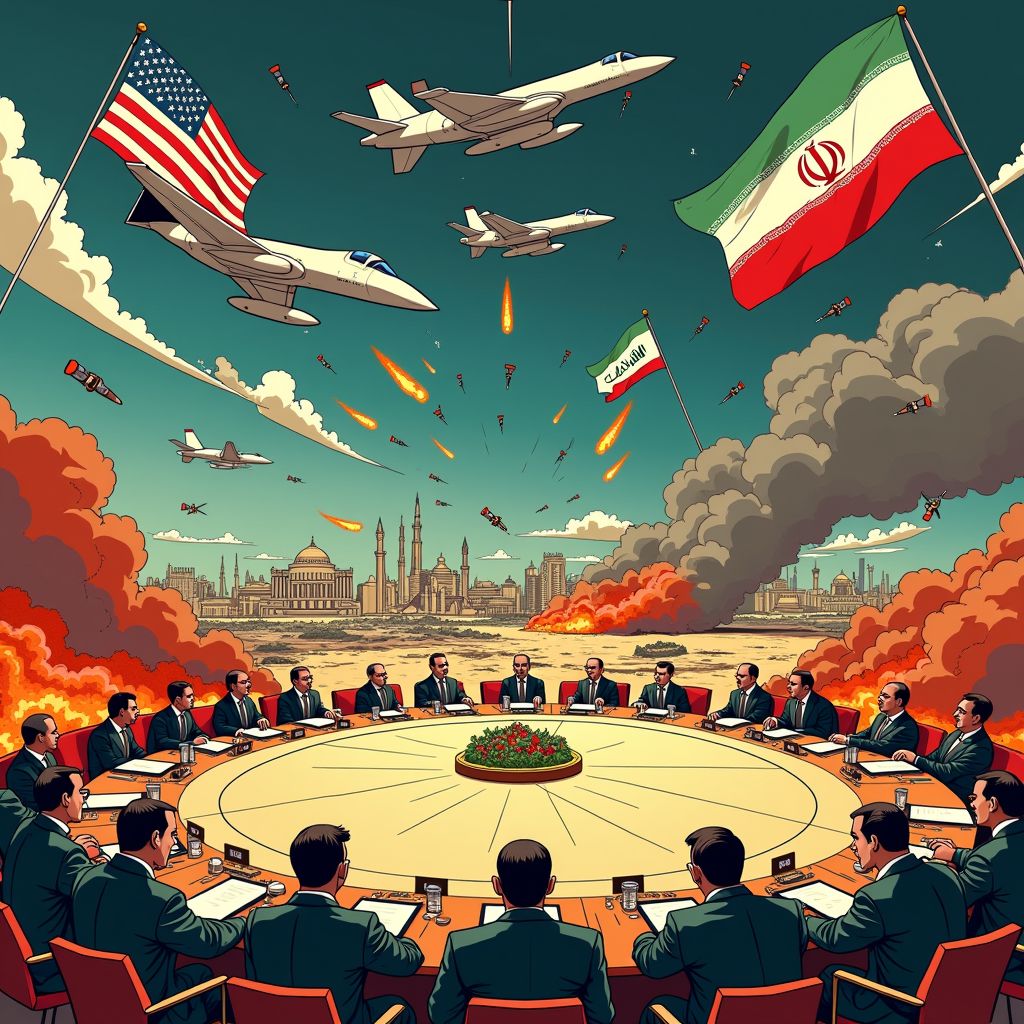
Iran heeft opnieuw aangevallen in het Midden-Oosten. Raketten en drones richting koeweit en israël. De vs en israël sloegen terug bij teheran en isfahan. De strijd duurt nu vijf weken. De strait of hormuz is gesloten. Dat vertraagt 20 procent van het wereldwijde olieverkeer. De olieprijs steeg naar 109 dollar per vat. Mensen vluchten uit zuid-libanon. Meer dan 1,3 miljoen mensen. De vs en israël begonnen met bombardementen in februari. Iran antwoordde massaal. Nu zijn beide zijden dieper verwikkeld. Diplomatie lijkt weg te zakken. De voormalige iraanse minister zarif stelt een akkoord voor. Beperkte nucleaire activiteit voor sanctievrijmaking. Maar harde linies in teheran negeren zachtere stemmen. De regio is nu een brandhaard. Geopolitieke spanningen stijgen. Energiesecuriteit staat op losse schroeven. Wereldleiders kijken nerveus toe. De kans op verdere escalatie groeit dagelijks.
escalating attacks in iran and kuwait
Iran launched coordinated missile and drone strikes across the Middle East on April 3, 2026, hitting critical infrastructure in Kuwait [1]. Attacks targeted the Mina al-Ahmadi oil refinery and a major desalination plant, causing significant fires and disruptions to essential services [2]. The assault marks a strategic expansion of Iran’s retaliation efforts following sustained U.S.-Israeli bombing campaigns inside its territory [3]. Regional defenses responded immediately, with Saudi Arabia intercepting drones and Bahrain reporting missile alerts [1]. Damage assessments confirm material harm to Kuwaiti energy and water infrastructure, underscoring the widening scope of cross-border strikes [2].
retaliatory strikes on tehran and tabriz
In response to Iran’s offensive actions, Israeli and U.S. forces conducted precision airstrikes on military targets in Iran on April 3, 2026 [4]. The Israeli Defense Forces officially confirmed launching attacks on Islamic Revolutionary Guard Corps (IRGC) installations in Tehran [5]. Concurrently, residents in Tabriz reported multiple explosion events around 16:46 and 17:45 local time, indicating coordinated strikes in northwestern Iran [5]. Eyewitness accounts describe blasts near Mount Eineli and the Valiasr district, though official statements have not disclosed specific objectives [5]. These counterstrikes represent a deepening of allied military involvement, directly engaging Iranian soil amid escalating regional tensions [4].
missile barrages target tel aviv and haifa
Iran’s Islamic Revolutionary Guard Corps initiated the 92nd wave of Operation True Promise 4, launching ballistic missiles toward Israel [6]. Two missiles specifically targeted Ramat David Airbase southeast of Haifa, known for hosting Israeli F-16 fighter squadrons [6]. Simultaneously, Khorramshahr-4 multi-warhead ballistic missiles struck more than fifty locations in central Tel Aviv and surrounding occupied territories [7]. The unprecedented scale of these attacks demonstrates Iran’s capacity to penetrate advanced air defense networks despite international countermeasures [6]. Civilian populations faced renewed threats, with emergency protocols activated across major urban centers in response to incoming projectiles [7].
air superiority contested over persian gulf
Iranian air defenses claimed successful engagements against advanced U.S. fighter jets operating in the region [8]. The IRGC announced the destruction of a U.S. F-35 stealth fighter over central Iran, marking the second such aircraft lost within twelve hours [8]. Another advanced American combat aircraft was reportedly shot down near Qeshm Island, crashing into the southern Persian Gulf [8]. These confrontations highlight intensifying aerial combat dynamics as coalition forces attempt to project power across heavily defended airspace [8]. While the U.S. Department of Defense has not verified these losses, prior incidents involving F-15s and surveillance platforms suggest increasing risks to manned aviation operations [9].
critical chokepoint remains closed
The Strait of Hormuz remains effectively closed to commercial shipping nearly five weeks into the conflict, severely disrupting global energy supplies [1]. Approximately twenty percent of worldwide oil and liquefied natural gas shipments normally traverse this narrow maritime corridor [1]. Persistent military activity and mine-laying operations continue preventing safe passage despite diplomatic initiatives aimed at reopening the route [10]. Global benchmark crude oil prices surged to $109 per barrel, reflecting heightened market anxiety over prolonged supply constraints [1]. Financial analysts warn extended closures could trigger broader economic instability absent alternative transportation solutions [1].
diplomatic efforts falter amid violence
Former Iranian foreign minister Mohammad Javad Zarif publicly advocated for negotiations involving nuclear limitations in exchange for comprehensive sanctions relief [11]. His proposal mirrors earlier frameworks suggesting mutual concessions could halt further escalation [11]. However, entrenched positions on both sides appear to override moderate voices seeking peaceful resolution [11]. Hardline factions within Tehran demand recognition of sovereignty over the Strait of Hormuz and reparations for damages incurred [10]. Parallel ceasefire proposals remain stalled at the United Nations Security Council due to opposition from permanent members concerned about enforcement mechanisms [10].
humanitarian toll mounts in region
Civilian suffering continues to escalate dramatically across multiple theaters of conflict [12]. Lebanese authorities report over 1,300 fatalities and displacement exceeding one million people from southern regions bordering Israel [12]. In Iran, casualty figures surpass 1,900 deaths attributed to coalition airstrikes targeting military sites [12]. Israel faces 19 confirmed fatalities alongside injuries resulting from missile impacts in populated zones [12]. Additional casualties include 20 deaths across Gulf states and 13 American service members killed during active operations [12]. Human rights organizations express growing concern about adherence to international humanitarian law amidst rapidly deteriorating conditions [12].
Bronnen
- www.kcrg.com
- www.whsv.com
- tasnimnews.ir
- news.cgtn.com
- www.instagram.com
- nournews.ir
- www.demorgen.be
- dgki.laio.info