eu joins us-led silicon peace initiative in major ai move
Brussel, dinsdag, 2 juni 2026.
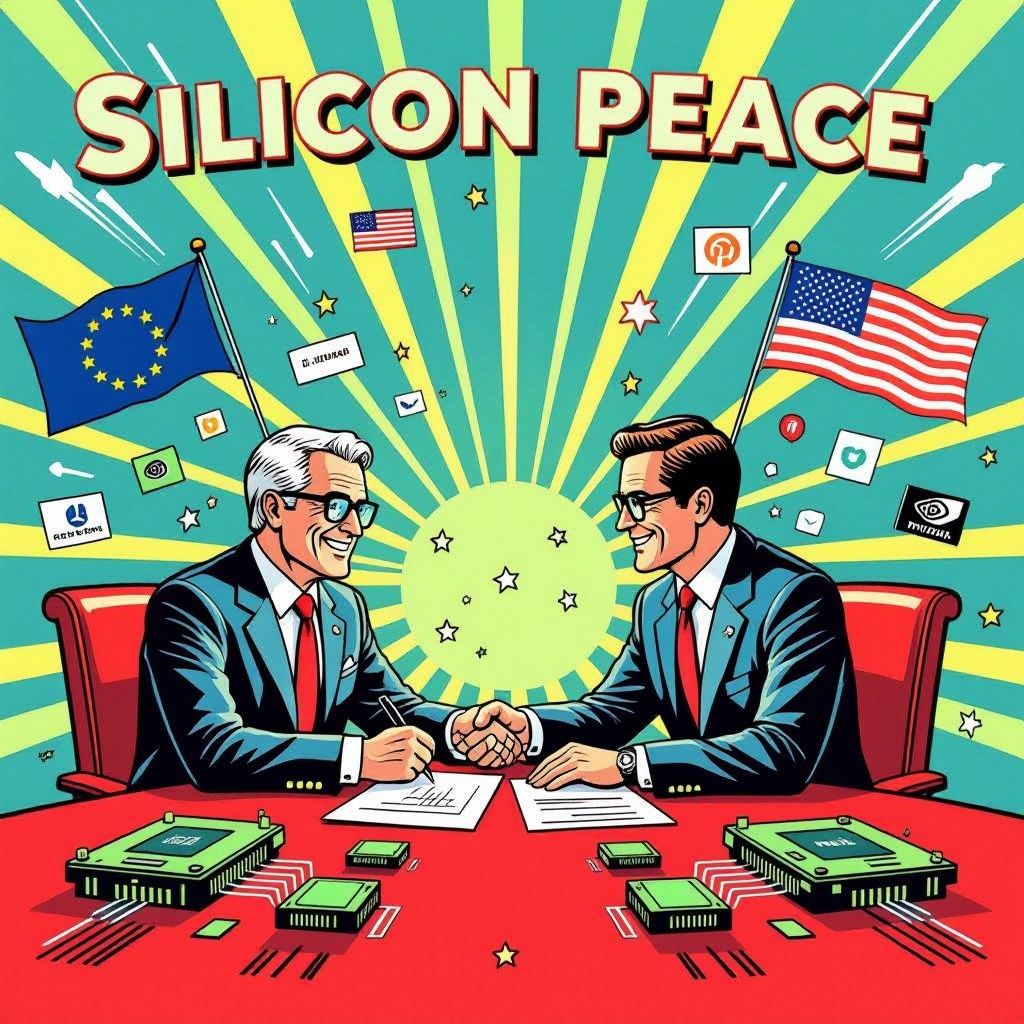
the european union is formally joining the us-led ‘silicon peace’ initiative, marking a significant geopolitical shift. this new alliance focuses on coordinating artificial intelligence and ai-chip supply chains to counter chinese technological advances. while the eu asserts the pact respects its regulatory independence, internal disagreements remain. france voices strong concern, calling the move a form of technological colonialism that undermines europe’s own quest for digital sovereignty. despite hesitation, pressure mounted as individual members like greece, finland, and sweden already signed on. the step cements deeper transatlantic tech ties amid intensifying global competition in artificial intelligence.
eu joins us-led silicon peace initiative in major ai move
The European Union is formally joining the US-led ‘Silicon Peace’ initiative, marking a significant geopolitical shift. This new alliance focuses on coordinating artificial intelligence and AI-chip supply chains to counter Chinese technological advances. While the EU asserts the pact respects its regulatory independence, internal disagreements remain. France voices strong concern, calling the move a form of technological colonialism that undermines Europe’s own quest for digital sovereignty. Despite hesitation, pressure mounted as individual members like Greece, Finland, and Sweden already signed on. The step cements deeper transatlantic tech ties amid intensifying global competition in artificial intelligence [1].
france resists perceived loss of tech autonomy
France stands as the most vocal critic of the EU’s decision to join the ‘Silicon Peace’ initiative. French officials argue the agreement contradicts the bloc’s pursuit of digital sovereignty and technological self-reliance. They fear alignment with US export controls and supply chain coordination will erode Brussels’ ability to set independent technology policy. Critics label the arrangement a form of neo-colonial dependency, tethering European innovation to American strategic objectives. This stance reflects broader unease among some member states about sacrificing regulatory autonomy for closer security and economic alignment with Washington [1].
supply chain coordination and procurement plans
The ‘Silicon Peace’ initiative aims to solidify Western control over key segments of the AI hardware supply chain. Central to the effort is coordinating export restrictions on advanced chips and related technologies to prevent their transfer to competitors. As part of its entry, the EU is expected to commit to procuring significant volumes of American-made AI chips. Reports indicate a planned purchase worth at least $40 billion in US semiconductor technology [1]. This massive investment signals deepening reliance on US suppliers like Nvidia and strengthens the transatlantic industrial partnership central to the initiative’s goals [1][3].
divergent paths in the global tech landscape
The formation of blocs like ‘Silicon Peace’ underscores a growing fragmentation in the global technology sphere. Once characterized by robust cross-border collaboration, particularly between Silicon Valley and Chinese firms, the relationship has significantly cooled due to geopolitical pressures [4]. The US has actively sought allies to limit China’s access to advanced computing power. Other nations are making similar choices; the Philippines recently joined the same initiative, highlighting how countries are aligning their technological and industrial policies with major powers based on strategic interests [3].