Agressie tegen raadsleden explodeert rond asielvraagstuk
Den Haag, donderdag, 12 februari 2026.
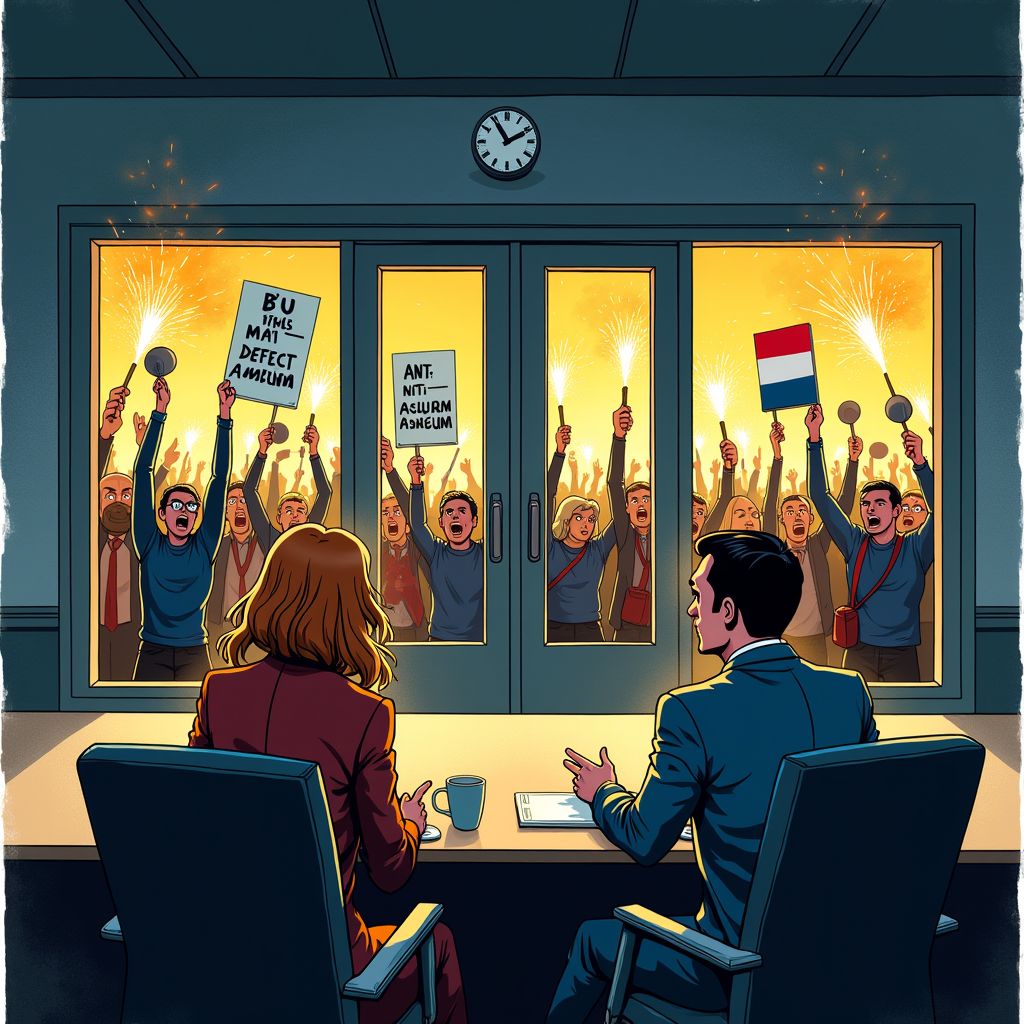
Het aantal gemeenteraadsleden dat agressie, intimidatie of geweld ervaart, is sinds 2022 meer dan verdubbeld. Ruim een derde meldt regelmatig dreiging. Vrouwen worden twee keer zo vaak belaagd als mannen. Veel incidenten hangen samen met het asielvraagstuk. Na besluiten over opvanglocaties volgen eieren, vuurwerk en doodsbedreigingen. Vergaderingen gaan achter gesloten deuren. Sommige raadsleden passen hun route aan of stoppen met flyeracties. De NVvR noemt de situatie zorgelijk. Online haat, anonieme berichten en politieke spanningen schroeven de druk op. Toch stelt driekwart van de huidige raadsleden zich opnieuw verkiesbaar. Ze blijven hun nek uitsteken, ondanks de risico’s. De veiligheid in de lokale democratie staat onder druk. Experts wijzen op gebrek aan bescherming en steun. Trainingen en veiligere zalen moeten helpen. Maar de wens om te dienen botst met toenemende woede in de samenleving.
sharp rise in intimidation cases reported
The number of municipal council members experiencing aggression, intimidation, or violence has more than doubled since 2022 [1]. Recent survey results indicate that 33 percent of council members face such incidents, up from 15 percent four years ago [3][4]. This sharp increase raises concerns about the working conditions and personal safety of elected officials across the Netherlands [2]. The phenomenon affects both large cities and small municipalities alike [1][3]. 120
women targeted disproportionately
Female council members are affected significantly more often than their male counterparts [3]. Women report being threatened nearly twice as frequently as men [4]. According to NVvR chair Abdullah Uysal, this gender-based disparity poses a serious threat to democratic representation [3]. “They will think twice about whether they want to become actively involved,” he warned [1]. Female politicians express concern over personal safety and increased scrutiny on social media platforms [5].
migration debates fuel hostility
Many aggressive incidents are directly linked to discussions surrounding asylum policy and refugee reception centers [1][3]. After parliamentary debate cast doubt on enforcement of the national dispersion law, tensions escalated locally [1]. Council members involved in decisions regarding asylum seeker centers (AZCs) report receiving threatening emails and messages [6]. Specific cases in Midden-Delfland and Den Hoorn illustrate how heated public sentiment turns into personal attacks [5].
personal consequences and changing behaviors
Thirty percent of affected council members say these experiences influence their ability to perform duties effectively [1][3]. Some adjust daily routines out of precaution [6]. Annelies Wielders from Munstergeleen stated she now cycles less and looks around more before entering buildings [6]. Others experience psychological strain despite remaining committed to public service [6]. Family members also feel the pressure, with spouses sometimes withdrawing from political visibility altogether [6].
concrete incidents escalate tension
Specific acts of aggression have been documented nationwide [6]. In Nuth, council member Lars Kockelkoren described having eggs thrown at his house and offensive texts placed on campaign signs [6]. Annelies Wielders filed a police report after an egg struck her home’s windshield [6]. Other reports mention fireworks aimed at residences and verbal abuse during canvassing activities [1][3]. Such actions create fear but rarely deter incumbents from seeking re-election [6].
institutional responses and preventive measures
The Dutch Association of Municipal Councillors (NVvR) calls for stronger institutional protection [3]. It criticizes national politicians who interfere in local asylum planning, calling such interference irresponsible [4]. The organization invests in training programs to prepare councillors for hostile interactions [4]. With ministry funding, council chambers are redesigned for improved security, including better sightlines and reduced exposure to audiences [4].
resilience amid growing risks
Despite rising hostility, three-quarters of sitting municipal councillors intend to run again in the March 18 elections [1][3][5]. This continuity suggests resilience within local governance structures [6]. NVvR leader Abdullah Uysal expressed confidence that all seats would be filled post-election [4]. He emphasized the dedication of those serving, stating they “stick their necks out every day for the community”—a contribution deserving respect [4].