Iran opent strategische Straat van Hormuz voor commerciële scheepvaart
Teheran, vrijdag, 17 april 2026.
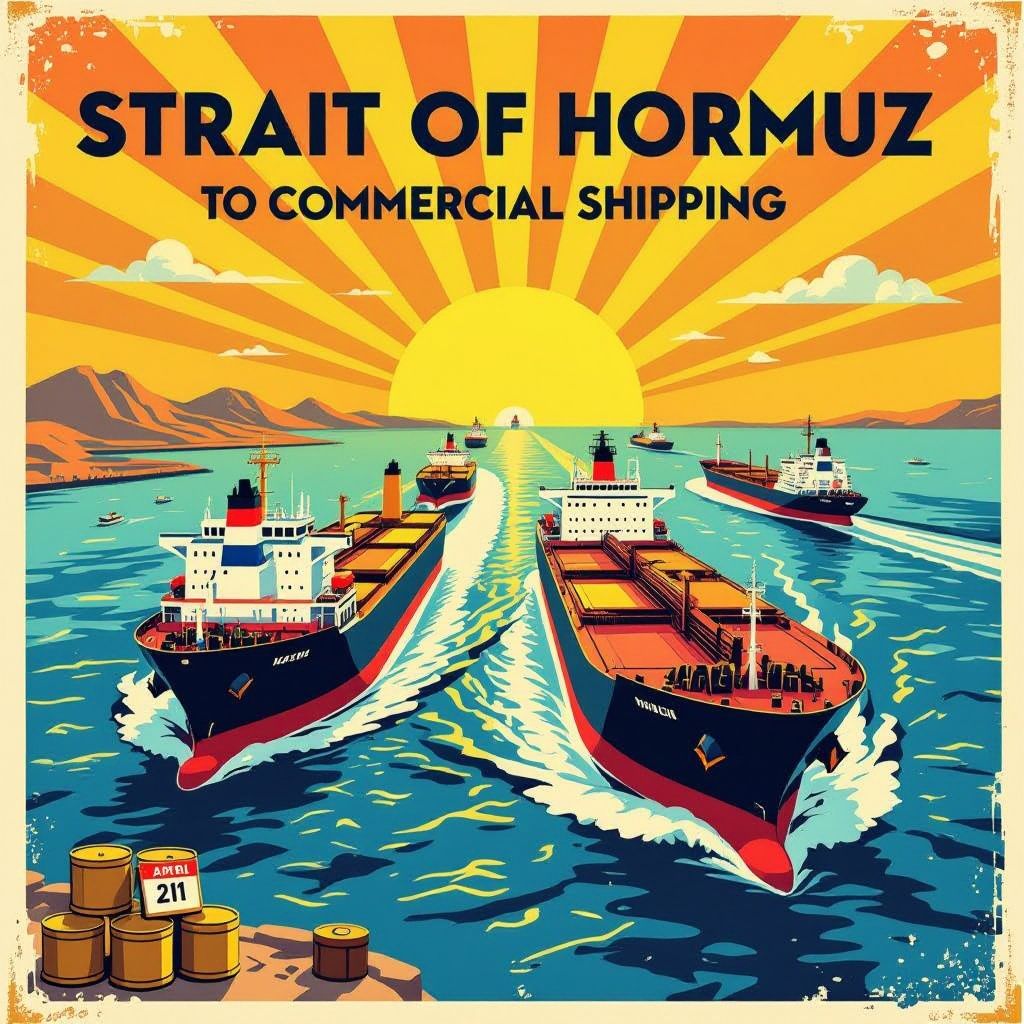
Iran heeft de Straat van Hormuz heropend voor commerciële scheepvaart na intense diplomatieke druk. De zeestraat, goed voor zo’n twintig procent van het wereldwijde olieverkeer, was tijdelijk afgesloten. De markt reageerde direct: olieprijzen daalden ruim tien procent binnen enkele minuten. Het besluit brengt opluchting voor de mondiale energiemarkt en maritieme handel, met name voor de Nederlandse economie die afhankelijk is van olie- en gasleveringen uit het Midden-Oosten. De opening is een tijdelijke maatregel, gekoppeld aan een wapenstilstand die tot 21 april loopt.
Iran opens Strait of Hormuz amid diplomatic pressure
Iran has reopened the strategic Strait of Hormuz to commercial shipping following intensified international diplomacy. The move comes during a temporary truce involving Iran, the United States, and Israel, which runs until April 21, 2026 [1]. Minister of Foreign Affairs Abbas Araghchi confirmed that the strait is now fully accessible to all commercial vessels, reversing earlier restrictions imposed during heightened regional tensions [2]. This development marks a shift from Tehran’s prior stance of blocking access to ships from adversarial nations [1].
Global markets respond swiftly to restored passage
The announcement triggered immediate reactions across global energy markets. Within minutes, international oil prices dropped significantly—by approximately 11% according to market tracking data [2]. U.S. crude fell to $83.30 per barrel, down 11.8%, while Brent crude declined 11.1% to $87.90 per barrel [2]. Concurrently, shares of major oil firms reflected the downturn: Shell slid 4.5% on the Amsterdam AEX index, BP lost nearly 6% in London, and TotalEnergies dropped almost 5% in Paris [1]. Conversely, airline stocks surged, with Air France-KLM climbing over 7% and easyJet gaining 8% in London trading [1].
Maritime industry remains cautious despite opening
Despite official assurances, key maritime players remain hesitant to resume transit through the narrow waterway. Major shipping companies including Germany’s Hapag-Lloyd have stated they continue to avoid routing through the strait pending verifiable security guarantees [2]. Norwegian shipowners echoed similar concerns, emphasizing that conditions remain unstable [2]. Even Dutch carriers described the reopening as a positive signal but stressed the need for enforceable safeguards before resuming operations [2]. Iran’s naval authorities have stipulated that only commercial vessels—not military craft—are permitted, subject to clearance and designated routes enforced by Iranian forces [2].
Conflicting signals persist on broader sanctions
While maritime traffic through the strait resumes under strict terms, U.S.-imposed blockades on Iranian ports remain in place. President Donald Trump affirmed that port restrictions will stay until a comprehensive agreement with Iran is finalized [2]. He emphasized the need for full compliance, stating negotiations must reach “100 percent” closure before lifting sanctions [2]. Meanwhile, the European Union reiterated its position that passage through critical waterways such as the Strait of Hormuz must remain free and unrestricted under international law [2]. EU foreign policy chief Kaja Kallas explicitly urged Iran to abandon any plans to impose tolls on transiting vessels [2].
Regional conflicts complicate fragile stability
Tensions elsewhere in the Middle East threaten to undermine the tentative progress achieved in maritime corridors. Just hours before the ceasefire took effect, Israeli airstrikes hit the Lebanese city of Tyre, resulting in 13 deaths, 35 injuries, and 15 missing persons [2]. Although a ten-day ceasefire exists between Israel and Lebanon, the Israeli Defense Forces retain positions in southern Lebanon citing ongoing threats from Hezbollah [2]. Furthermore, Iran continues to demand the release of frozen financial assets—a point of contention likely to influence future negotiations [2]. With the current truce set to expire on April 21, 2026, without guaranteed renewal, uncertainty persists [2].