duizenden vondsten in drenthe doen verleden herleven
Coevorden, woensdag, 10 juni 2026.
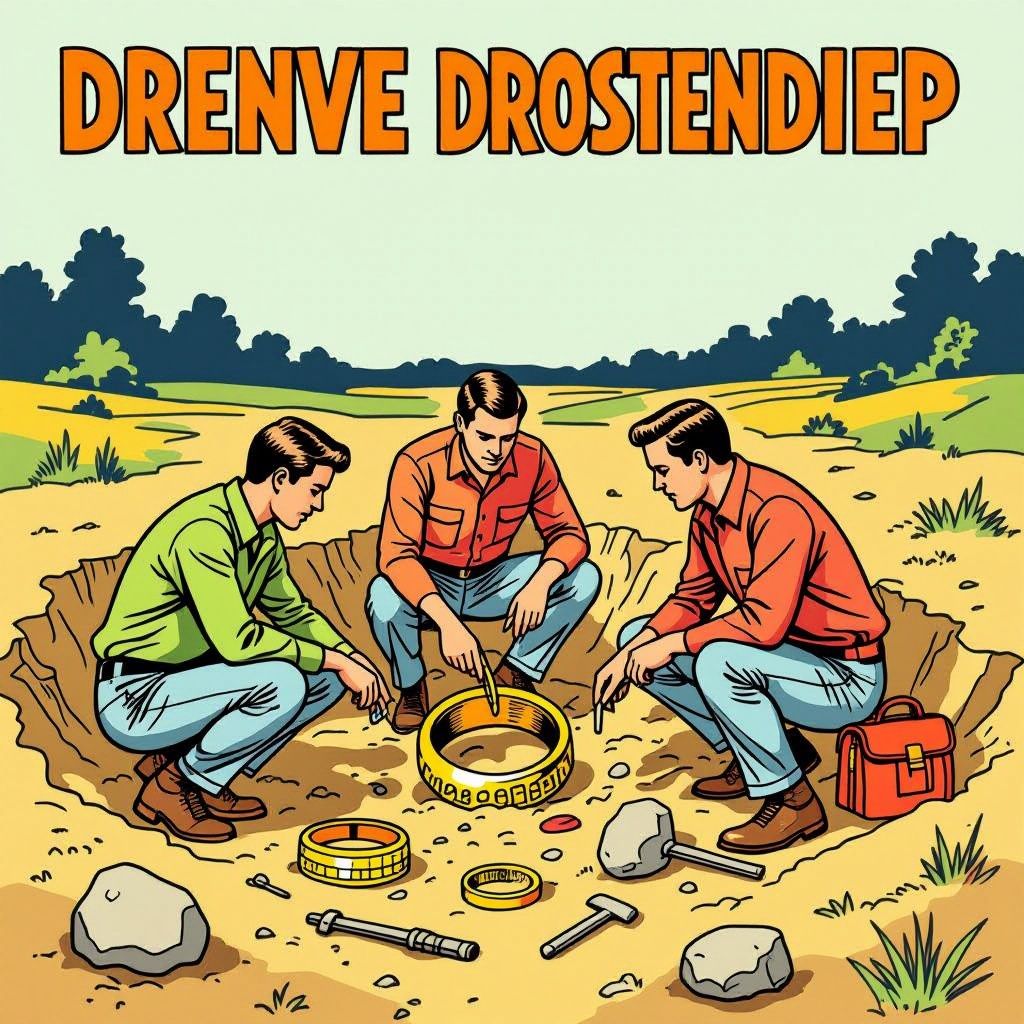
In het Drentse beekdal Nieuwe Drostendiep zijn meer dan drieduizend archeologische vondsten gedaan. De vondsten komen uit een breed tijdsbestek, van de Steentijd tot de Tweede Wereldoorlog. Ruim zestig procent van de objecten zijn gereedschap, sieraden en gebruiksvoorwerpen. Wat opvalt, is de uitzonderlijk goede staat waarin ze zijn bewaard gebleven. Dat komt doordat de bodemlaag lang ongestoord is gebleven. Een gouden ring uit de derde of vierde eeuw na Christus kwam er bijna nieuw uit. Ook een oude fibula werd gevonden. Archeologen noemen het een bijzonder rijke vindplaats. De vondsten geven unieke inzichten in eeuwenlang menselijk leven in Drenthe.
thousands of artifacts unearthed in new drostendiep
More than 3,000 archaeological finds were discovered during research in the New Drostendiep stream valley near Coevorden [1]. The artifacts span from the Stone Age to World War II [1]. Over 600 of these items are classified as exceptionally remarkable by archaeologists [1][2]. Objects include jewelry, tools, and everyday utensils [1][2][3]. Many finds originate from periods such as the Bronze Age, early Middle Ages, and the Eighty Years’ War [1][2]. The excellent preservation state results from minimal soil disturbance over centuries [1][2][3].
rare gold ring and fibula among standout discoveries
Among the most striking finds is a nearly pristine golden ring dating from the third or fourth century AD [3]. Its exceptional condition stems from gold’s resistance to corrosion [3]. Also uncovered was a fibula—a type of clothing pin used in antiquity [3]. Experts believe this particular fibula dates back to the tenth or eleventh century AD [3]. Such personal adornments provide rare insights into ancient craftsmanship and daily life [3]. The discovery of late historical objects, including those from World War II, illustrates continuous human activity in the area [1][3].
collaborative excavation reveals deep regional history
The excavation formed part of ecological restoration works led by Waterschap Vechtstromen and the province of Drenthe [1][2]. Partner organizations included Nature Monument, the Drenthe Landscape Foundation, and Agrarian Nature Drenthe [1][2]. Deputy Yvonne Turenhout emphasized the importance of these findings for regional identity [1][2]. “We are proud of the rich history of our beautiful Drenthe landscape,” she stated [1][2]. The finds demonstrate how stream valleys served as routes, food sources, and spiritual sites across generations [1][2][3].
finds await analysis and future public presentation
Currently, the artifacts undergo further study, cleaning, and cataloging by specialists [1][2][3]. The provincial government and Coevorden municipality are exploring ways to display the collection publicly [1][2]. Options under consideration include physical exhibitions and digital access platforms [1][2]. Announcements regarding public access are expected after summer 2026 [1][2]. The comprehensive nature of the find makes it highly significant for understanding settlement patterns in northern Netherlands [1][2][3].