een kind begint al met 2-0 achterstand in amsterdam-zuidoost
Amsterdam, vrijdag, 5 juni 2026.
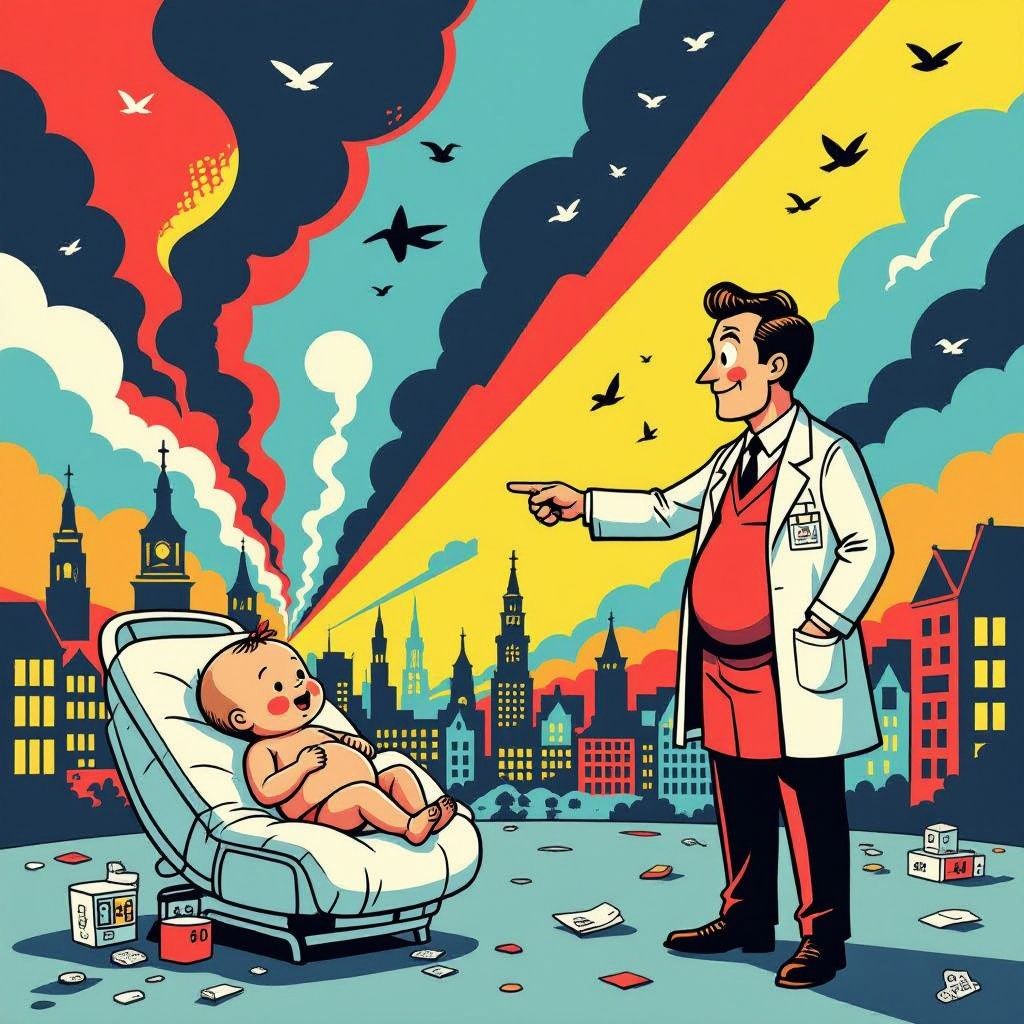
In Amsterdam-Zuidoost sterven twee keer zoveel pasgeborenen als elders in Nederland. Dit is geen uitzondering, maar een systeemverschijnsel. Kinderarts Jasper Been noemt het een 2-0 achterstand bij geboorte. Het onderzoek van Erasmus MC wijst uit dat de leefomstandigheden de hoofdschuldige zijn. Denk aan slechte luchtkwaliteit, geluidsoverlast en hittestress. Deze factoren veroorzaken toxische stress bij zwangere vrouwen. Die stress beperkt de groei van het kind in de baarmoeder. De gevolgen zijn dramatisch: meer vroeggeboortes, ondergewicht en stiltegeboortes. Een kwetsbare wijk bepaalt mee hoe gezond een kind wordt. Preventie moet dus nu al beginnen, lang voor de geboorte. Het programma Kansrijke Start probeert sociale en medische zorg te combineren. Maar experts benadrukken: verbetering van de woonomgeving is essentieel voor duurzame verandering.
disproportionate infant mortality in vulnerable neighborhoods
In Amsterdam-Zuidoost, 8 out of every 1,000 babies die during or shortly after birth [1]. This rate is twice as high as the national average of approximately 4 deaths per 1,000 live births [2][3]. Recent research from Erasmus MC confirms that these outcomes are not isolated incidents but reflect systemic inequalities rooted in social and environmental conditions [4]. The study analyzed data from over 1.1 million pregnancies between 2015 and 2021, including around 100,000 from the country’s 20 most disadvantaged neighborhoods under the National Program for Livability and Safety (NPLV) [5].
environmental factors driving poor pregnancy outcomes
Poor living conditions such as air pollution, noise nuisance, damp housing, heat stress, and crime contribute significantly to adverse pregnancy outcomes [3][5]. Chronic exposure leads to what medical professionals call “toxic stress”—a condition impairing placental function and reducing oxygen and nutrient supply to the developing fetus [2][4]. According to Professor Eric Steegers, a gynecologist at Erasmus MC, “This accumulation of problems creates toxic stress, which nobody can endure indefinitely” [3]. Such stress negatively impacts fetal brain development and organ formation even before birth [5].
higher rates of preterm and low-weight births
Beyond stillbirths, babies born in Amsterdam-Zuidoost face elevated risks of being born prematurely or with low birth weight [1][4]. Approximately 7% of infants are born preterm compared to 5% nationally [2][3]. A striking 20% of newborns have low birth weight—a figure double the rate observed in non-disadvantaged areas [3][5]. Children weighing less than 500 grams require intensive neonatal care because vital organs like lungs and intestines are insufficiently developed [3]. As Dr. Jasper Been notes, “The smallest babies we treat fit in your palm” [3].
structural inequality begins before birth
Health disparities emerge before a child takes its first breath [3]. Dr. Jasper Been describes this reality bluntly: “Children born in poorly livable, unsafe neighborhoods already start life 2–0 behind” [3][5]. The comparison highlights how deeply location influences health equity [2]. Unlike clinical risk factors tied to individual behavior, these patterns persist independently of migration background or maternal age, pointing to broader environmental causes [4]. Researchers emphasize that healthcare providers must now consider patients’ socioeconomic environments as part of standard assessment protocols [3][5].
need for integrated policy and preventive action
Experts argue that solutions cannot rely solely on medical interventions [2]. Addressing root causes demands cross-domain collaboration involving urban planning, education, mental health services, and law enforcement [4]. Initiatives like Kansrijke Start aim to integrate social and medical support during a child’s crucial first 1,000 days [3][5]. Yet stakeholders agree that without substantial improvements to physical living conditions—including better housing insulation, reduced traffic emissions, and greener public spaces—progress will remain limited [2][4]. Investment in neighborhood infrastructure is essential for lasting change [2].