chinesische bedrijven profiteren massaal van staatssteun
Beijing, maandag, 1 juni 2026.
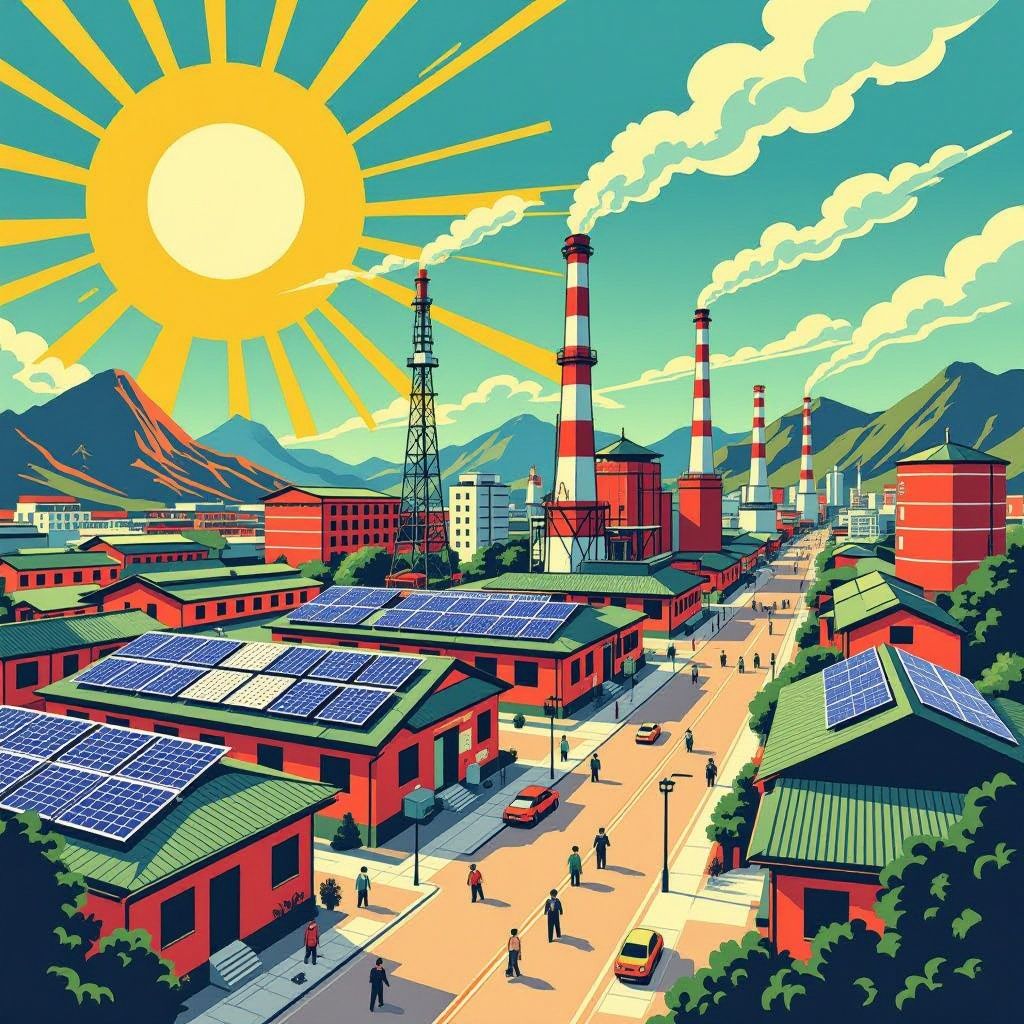
Chinese bedrijven ontvangen sinds 2005 gemiddeld drie tot acht keer meer overheidssteun dan hun westerse tegenhangers. Ruim de helft van alle industriële subsidies wereldwijd komt uit china. Vooral in sectoren als zonnepanelen, halfgeleiders en zware industrie wordt agressief gesteund. Volgens de OESO is 60 procent van de marktaandeelgroei van chinese bedrijven terug te voeren op staatssteun, tegenover 22 procent wereldwijd. Deze steun komt vooral in de vorm van subsidies, belastingvoordelen en goedkope leningen. Daardoor kunnen chinese producenten op de wereldmarkt vaak tegen lagere prijzen opereren. Internationale kritiek groeit op grond van oneerlijke concurrentie.
disproportionate state support fuels chinese industrial growth
Chinese companies have received significantly more state support than their Western counterparts over the past two decades. According to the OECD, Chinese firms benefited from three to eight times more government assistance compared to companies in OECD nations between 2005 and 2024 [1]. This support primarily comes in the form of subsidies, tax incentives, and low-interest loans, giving Chinese enterprises a substantial competitive edge on global markets [2]. The scale of intervention means nearly 52 percent of all industrial subsidies worldwide originate from China [1]. Such figures underscore systemic differences in economic governance and industrial policy approaches.
subsidies drive market expansion but not efficiency
State-backed financing has directly contributed to aggressive market share gains by Chinese corporations. Around 60 percent of market share increases achieved by Chinese firms since 2005 are attributable to government subsidies [3]. In contrast, only 22 percent of global market share growth among expanding firms overall stems from similar support [3]. Despite boosting competitiveness abroad, these subsidies show little correlation with improved productivity or profitability [4]. The OECD warns such practices risk distorting international markets and fostering overcapacity, particularly in capital-intensive sectors reliant on sustained public funding [4].
key sectors benefit disproportionately
Certain strategic industries receive outsized governmental backing in China. Sectors including renewable energy equipment, semiconductors, and heavy industry—such as aluminum, steel, and shipbuilding—are among the most heavily subsidized relative to sales [3]. Solar panel manufacturers and semiconductor producers have drawn particular attention due to rapid export growth fueled by non-market mechanisms [1]. State-owned or majority state-controlled enterprises tend to access larger volumes of support, often through direct grants and preferential lending terms [3]. This concentrated investment aligns with national industrial policies targeting technological self-reliance and export dominance [4].
international concern grows over fair competition
Mounting evidence of asymmetric state support has triggered concerns among trading partners about fairness in global commerce. European officials warn that Chinese pricing power, enabled by deep-pocketed state sponsorship, undermines local producers who cannot match artificially reduced costs [2]. EU Commissioner Stéphane Séjourné recently signaled intentions to impose additional tariffs and restrictions on select Chinese imports [2]. Belgium’s Flemish Prime Minister Matthias Diependaele echoed these sentiments, calling for stronger EU strategies to counter what he describes as unfair trade practices [5]. Without greater transparency and reciprocity, tensions may escalate further in coming months [4].
calculating the competitive gap
The disparity in subsidy dependency between Chinese and Western firms represents a profound shift in competitive dynamics. While 22 percent of global market share gains stem from state support, Chinese firms attribute 60 percent of their expansion to similar measures [3]. The relative increase in reliance on subsidies can be expressed as 172.727, highlighting a surge exceeding 170 percent compared to the global average [3]. This widening gap suggests structural challenges for unsubsidized competitors attempting to maintain parity in price-sensitive industries [4].